
Papercraft Posters
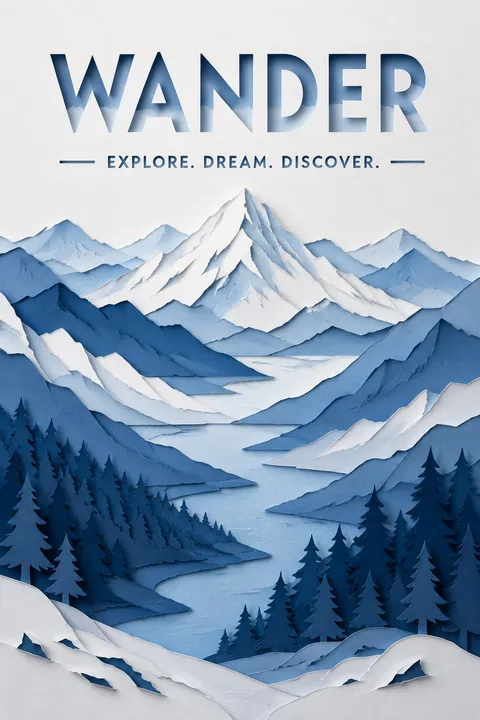
Rooted in centuries-old paper construction traditions such as origami, kirigami, and pop-up book engineering, papercraft evolved through innovations in children’s publishing and gained new visibility with artists like Matthew Shlian and Yulia Brodskaya in the 21st century. Its philosophy honors the transformation of humble materials, emphasizing visible construction—edges, folds, and shadows—that invites viewers to appreciate both the process and the approachable, handmade warmth of the result.
5 credits for new user registration. No credit card required.
Create Your Own Papercraft Poster
Use our AI generator to design Papercraft posters in seconds with full commercial rights.
Create Papercraft Poster


Turn Ideas into Art in Seconds
Describe Your Vision
Simply type your idea or concept for the poster.
Select Papercraft
Our AI applies the specific Papercraft design rules to your concept.
Customize & Download
Fine-tune colors, add text, and export in high-resolution.
Why Designers Choose Us
The professional choice for AI-generated design
Instant Speed
Results in < 30s
CC0 License
100% Commercial Use
AI Editing
Edit compatible 1K/2K posters you own. 4K posters are download-only.
High Res
Print-ready quality
About Papercraft
History of Papercraft
Design Philosophy
Related Keywords
Papercraft FAQ
Quick answers about designing Papercraft posters.
What is papercraft and how does it differ from origami?
Papercraft involves cutting, folding, and gluing paper sheets to create three-dimensional sculptures and models, distinguishing it from origami which relies solely on folding without cuts or adhesives. Papercraft templates feature numbered flaps that connect puzzle-like to form complex shapes. The technique allows for highly detailed, realistic models impossible to achieve through folding alone, from geometric animals to architectural structures.
What are the essential tools and materials needed for papercraft?
For physical papercraft, cardstock, a craft knife, adhesive, a bone folder and a cutting mat are useful manual tools. On this poster page, use those materials as visual references: describe layered paper, folded edges and cast shadows in the generator. The result is a digital image, not a cut-ready pattern or a kit.
What are the fundamental folding techniques in papercraft?
Two basic fold types form the foundation: mountain folds create peaks by folding paper upward into a ridge, while valley folds form troughs by folding downward into a V-shape. Template lines indicate fold types using dashed and dotted patterns. Scoring along fold lines before creasing produces cleaner, more precise folds. Proper folding sequence matters significantly, as folding in the wrong order can make later folds inaccessible.
How do I create a papercraft-style poster rather than a physical model?
Start from this page’s create button and describe a paper-built subject, layered cardstock, fold lines and directional shadows. Include the headline and leave a quiet area for key details. Inspect the generated image for coherent edges and readable text. Pepakura and other unfolding tools belong to a separate physical-model workflow; Poster does not turn the image into numbered cutting templates.
Ready to design your next poster?
Create Papercraft Poster