
Retro-Futurism Posters
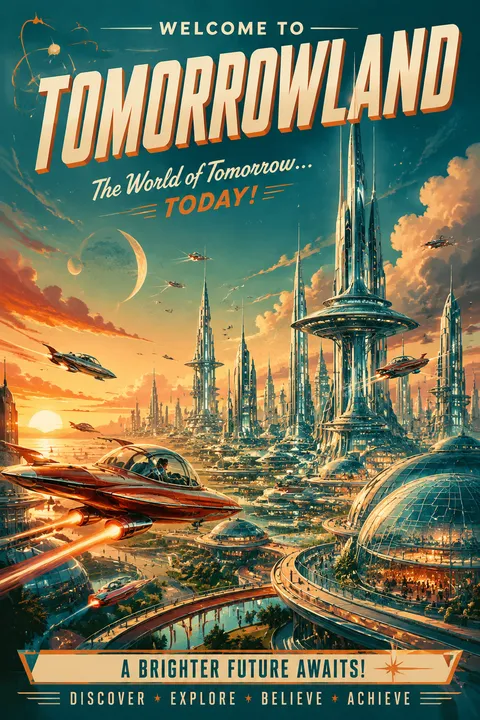
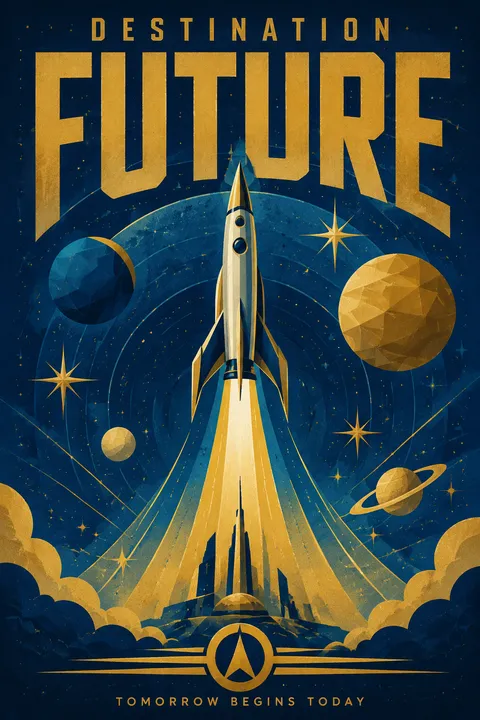
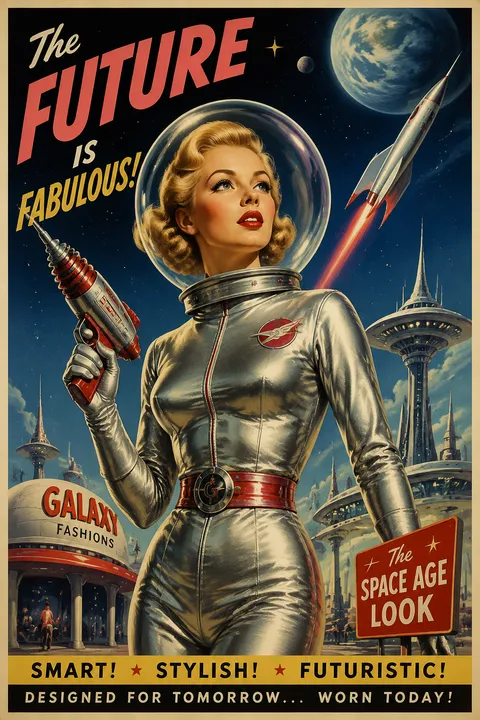
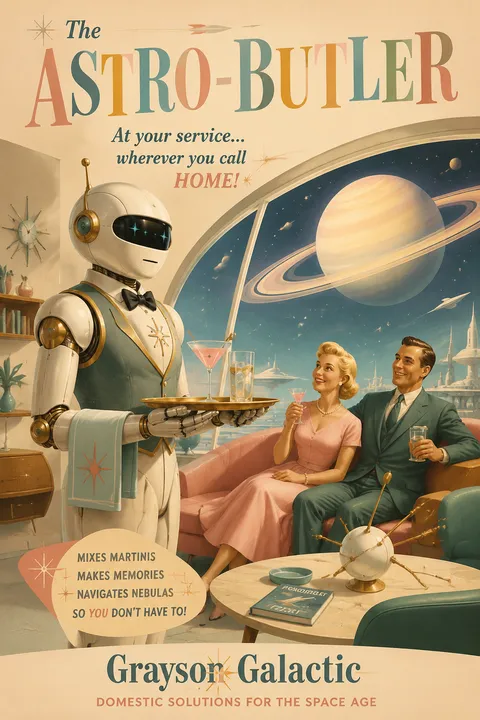
Coined in the 1980s, retro-futurism reflects how past generations—especially during the mid-20th century—envisioned technology’s promise through streamlined forms, atomic motifs, and space-age imagery. This design philosophy celebrates the earnest optimism that design could create better futures, while also acknowledging the bittersweet nostalgia for imagined tomorrows that never arrived. Retro-futurism values both the charm of bygone predictions and humanity’s enduring capacity to dream of transformation.
5 credits for new user registration. No credit card required.
Create Your Own Retro-Futurism Poster
Use our AI generator to design Retro-Futurism posters in seconds with full commercial rights.
Create Retro-Futurism Poster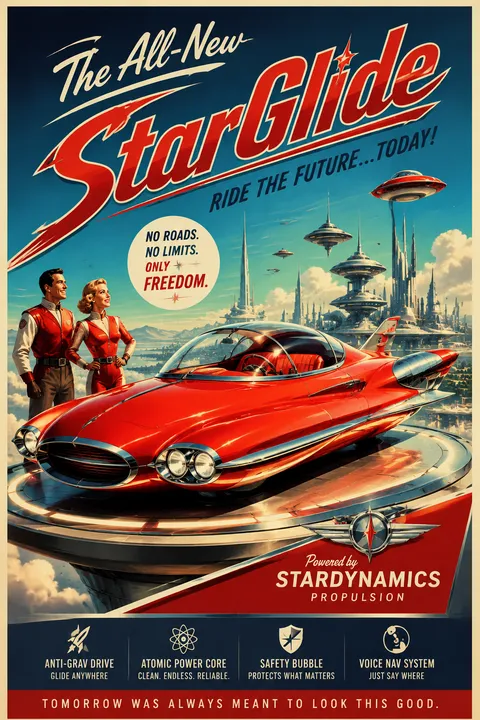
The Art of Retro-Futurism?
Turn Ideas into Art in Seconds
Describe Your Vision
Simply type your idea or concept for the poster.
Select Retro-Futurism Style
Our AI applies the specific Retro-Futurism design rules to your concept.
Customize & Download
Fine-tune colors, add text, and export in high-resolution.
Why Designers Choose Us
The professional choice for AI-generated design
Instant Speed
Results in < 30s
CC0 License
100% Commercial Use
Fully Editable
Layer-by-layer control
High Res
Print-ready quality
About Retro-Futurism Design
History of Retro-Futurism
Design Philosophy
Retro-Futurism FAQ
Quick answers about designing Retro-Futurism posters.
What exactly is retro-futurism in design?
Retro-futurism is a creative movement that combines old-fashioned retro styles with futuristic technology, looking back at how earlier generations imagined the future. It explores the tension between past and future, featuring sleek chrome surfaces, neon-lit landscapes, curved aerodynamic forms, and analog-meets-digital interfaces. The style essentially asks: 'What did people in the past think the future would look like?' and embraces those nostalgic visions of tomorrow.
What visual elements are common in retro-futuristic design?
Retro-futuristic design features exaggerated structures drawing from Art Deco, Streamline Moderne, and Mid-Century Modern Googie architecture. Common imagery includes robots, rayguns, space colonies, flying cars, and interstellar travel. The style uses sleek aerodynamic forms with rounded edges, prominent chrome elements, and vibrant colors ranging from Atomic Age pastels to cyberpunk neons. Grainy textures, clunky robots, and fantastical gadgetry complete the aesthetic.
What are the different sub-genres of retro-futurism?
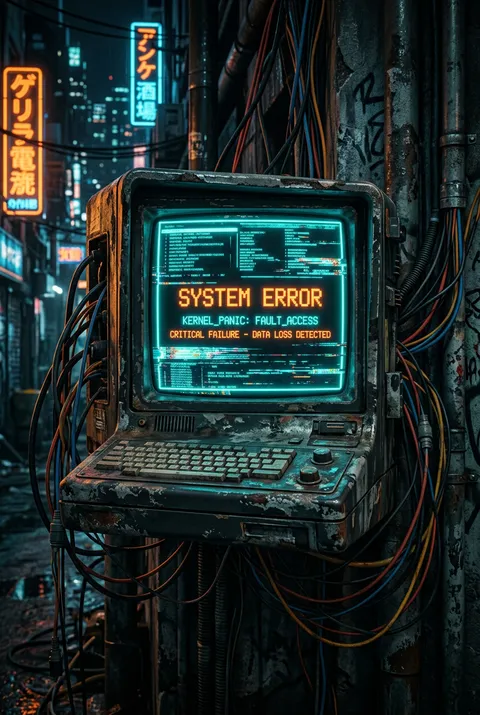
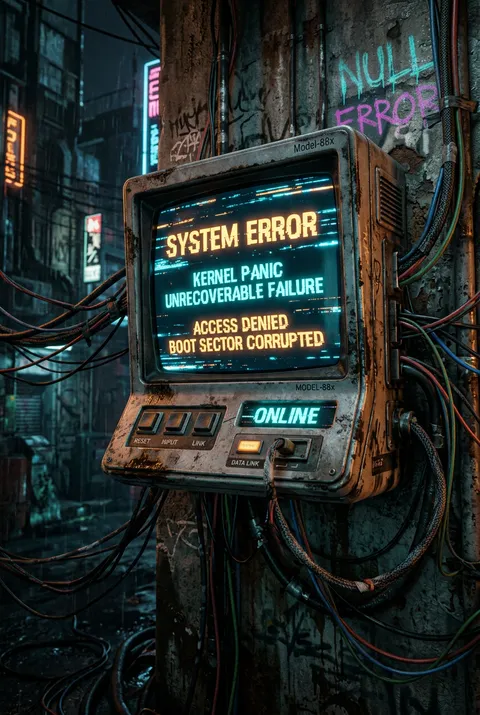
Retro-futurism encompasses several distinct sub-genres: Steampunk blends Victorian aesthetics with steam-powered technology. Dieselpunk focuses on 1920s-1940s industrial design. Atompunk captures the optimistic space-age vision of the 1950s-60s with warm, bright colors. Cyberpunk represents 1980s-90s futurism with neon lights, dark backgrounds, and dystopian themes. Raygun Gothic incorporates Googie and Art Deco elements into science fiction environments.
Why has retro-futurism made a comeback in modern design?
Retro-futurism appeals to contemporary designers and audiences because it combines nostalgia with imagination, offering an alternative vision of technological progress. In an era of sleek minimalism and digital interfaces, the style's warmth, optimism, and tangible mechanical elements feel refreshingly different. It also provides commentary on how our relationship with technology has evolved, contrasting utopian past predictions with present realities.
Ready to design your next poster?
Create Retro-Futurism Poster