/
50,000 Posters Generated Today

Disco Posters

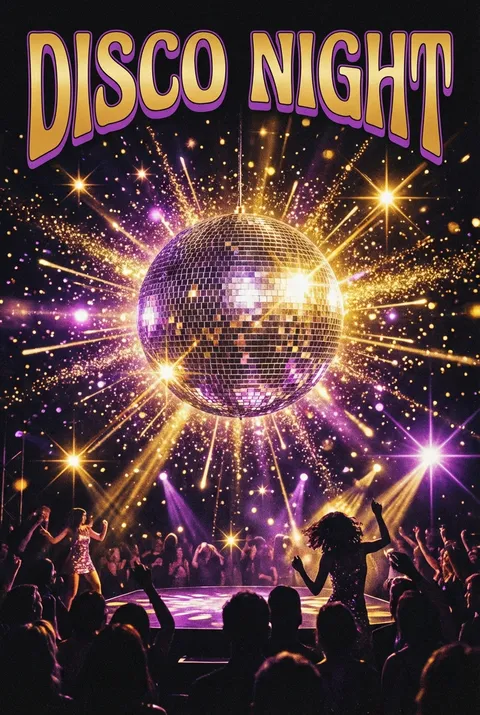
Disco took shape in early 1970s New York, rising from the underground clubs of African-American, Latino, and LGBTQ+ communities, with DJs like David Mancuso and Larry Levan revolutionizing dance music culture. Its design philosophy revels in exuberant glamour and joyful excess, discarding restraint in favor of reflective surfaces, vibrant color, and celebratory imagery—transforming visual pleasure into a liberating escape where the dance floor reigns supreme.

5 credits for new user registration. No credit card required.

High ResolutionCommercial License

Create Your Own Disco Poster

Use our AI generator to design Disco posters in seconds with full commercial rights.

Create Disco Poster
Featured Disco Posters

Style Guide

The Art of Disco?

Disco took shape in early 1970s New York, rising from the underground clubs of African-American, Latino, and LGBTQ+ communities, with DJs like David Mancuso and Larry Levan revolutionizing dance music culture. Its design philosophy revels in exuberant glamour and joyful excess, discarding restraint in favor of reflective surfaces, vibrant color, and celebratory imagery—transforming visual pleasure into a liberating escape where the dance floor reigns supreme.
Disco representative poster

Watch: Creating a Poster in 30s

Turn Ideas into Art in Seconds

1

Describe Your Vision

Simply type your idea or concept for the poster.

2

Select Disco Style

Our AI applies the specific Disco design rules to your concept.

3

Customize & Download

Fine-tune colors, add text, and export in high-resolution.

Why Designers Choose Us

The professional choice for AI-generated design

Instant Speed

Results in < 30s

CC0 License

100% Commercial Use

Fully Editable

Layer-by-layer control

High Res

Print-ready quality

Disco Design Guide

About Disco Design

Disco took shape in early 1970s New York, rising from the underground clubs of African-American, Latino, and LGBTQ+ communities, with DJs like David Mancuso and Larry Levan revolutionizing dance music culture. Its design philosophy revels in exuberant glamour and joyful excess, discarding restraint in favor of reflective surfaces, vibrant color, and celebratory imagery—transforming visual pleasure into a liberating escape where the dance floor reigns supreme.

History of Disco

Disco emerged in early 1970s New York from African-American, Latino, and LGBTQ+ underground club culture. DJs like David Mancuso (The Loft), Nicky Siano (The Gallery), and Larry Levan (Paradise Garage) developed the format of continuous mixed dance music that defined the genre. The scene went mainstream with the Bee Gees' "Saturday Night Fever" soundtrack (1977), making disco briefly the dominant popular music form. The visual culture of disco centered on the nightclub as theatrical environment. Mirror balls fragmented light into moving patterns; metallic and reflective surfaces multiplied these effects; flamboyant fashion embraced sequins, lamé, and platform shoes. Album covers from the era—by designers like Paula Scher for CBS Records—translated nightclub glamour into graphic form: airbrushed lettering, gradient backgrounds suggesting colored lights, and imagery of ecstatic dancers. Though a cultural backlash (exemplified by Chicago's "Disco Demolition Night" in 1979) drove disco underground, its aesthetic influence proved lasting. Contemporary disco revival appears in fashion, interior design, and graphic work seeking to channel unironic celebration, LGBTQ+ history, and the particular glamour of 1970s nightlife—glitter as resistance to everyday drabness.

Design Philosophy

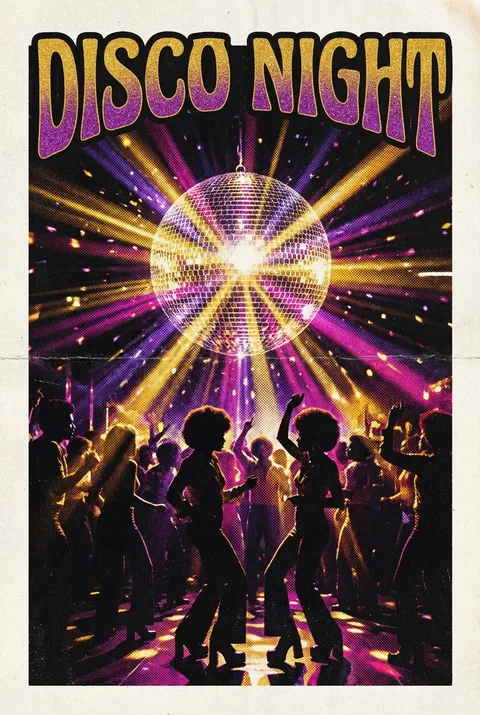
Disco poster design embraces maximum glamour without ironic distance. The philosophy celebrates excess, pleasure, and the transformation of self through fashion and nightlife. Where much contemporary design values restraint, disco values abundance—more sparkle, more color, more reflective surfaces. Core visual elements include metallic and holographic effects, mirror ball light patterns, gradient backgrounds suggesting club lighting, exuberant typography (often script or display faces), and imagery of dance, celebration, and fashionable figures. The emotional register is joyful, liberating, and proudly superficial—disco design creates visual pleasure as end in itself, offering escape through glamour into worlds where the dance floor is the only reality.

Disco FAQ

Quick answers about designing Disco posters.

What defines the disco visual aesthetic?

The disco aesthetic celebrates maximum glamour through shimmering metallic fabrics, mirror balls, and dazzling reflective surfaces. The visual language features bold geometric patterns, psychedelic designs, and vibrant colors like hot pink, electric blue, and gold. Every element was designed to catch and reflect light, creating an atmosphere of constant movement and energy.

What colors and materials are central to disco design?

Disco design relies on eye-catching materials including lamé, lurex, satin, and stretch velvet—all chosen for their light-reflecting properties. The color palette ranges from metallic golds and silvers to vivid purples, fuchsias, and electric blues. These combinations created the futuristic, space-age look that defined 1970s dance culture.

What were the iconic fashion items of the disco era?

Key disco fashion items included bell-bottom pants with dramatic flares, figure-hugging jumpsuits for both men and women, and platform shoes with towering soles. Women favored shimmering wrap dresses and halter tops, while men embraced open-collared shirts in synthetic fabrics. Accessories featured oversized jewelry and statement pieces designed to sparkle under dance floor lights.

How did disco influence interior design?

Disco-era interiors embraced opulence through mirrored surfaces, plush velvet furnishings, and bold color schemes featuring purple, fuchsia, and gold. Nightclubs became immersive environments with elaborate lighting systems, including the iconic disco ball. This maximalist approach emphasized creating luxurious, indulgent spaces designed for spectacle and celebration.

Ready to design your next poster?

Create Disco Poster