
Vaporwave Posters
Emerging online around 2010, vaporwave began as a music and art movement transforming 1980s-90s corporate soundtracks into nostalgic, surreal experiences—artists like Chuck Person and Macintosh Plus reimagined commercial muzak as haunted memory. Its philosophy uncovers unexpected beauty in the visual detritus of early digital capitalism, recontextualizing disposable graphics, pastel gradients, and obsolete interfaces to create dreamlike critiques of consumer culture.
5 credits for new user registration. No credit card required.
Create Your Own Vaporwave Poster
Use our AI generator to design Vaporwave posters in seconds with full commercial rights.
Create Vaporwave Poster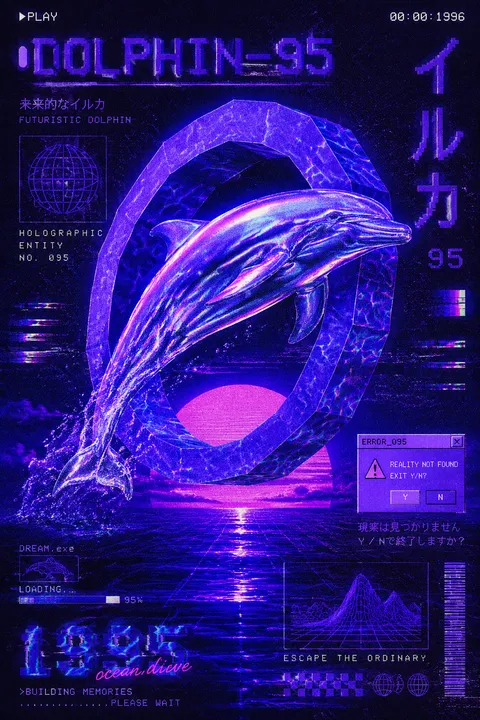
The Art of Vaporwave?
Turn Ideas into Art in Seconds
Describe Your Vision
Simply type your idea or concept for the poster.
Select Vaporwave Style
Our AI applies the specific Vaporwave design rules to your concept.
Customize & Download
Fine-tune colors, add text, and export in high-resolution.
Why Designers Choose Us
The professional choice for AI-generated design
Instant Speed
Results in < 30s
CC0 License
100% Commercial Use
Fully Editable
Layer-by-layer control
High Res
Print-ready quality
About Vaporwave Design
History of Vaporwave
Design Philosophy
Related Keywords
Vaporwave FAQ
Quick answers about designing Vaporwave posters.
What defines the vaporwave visual aesthetic?
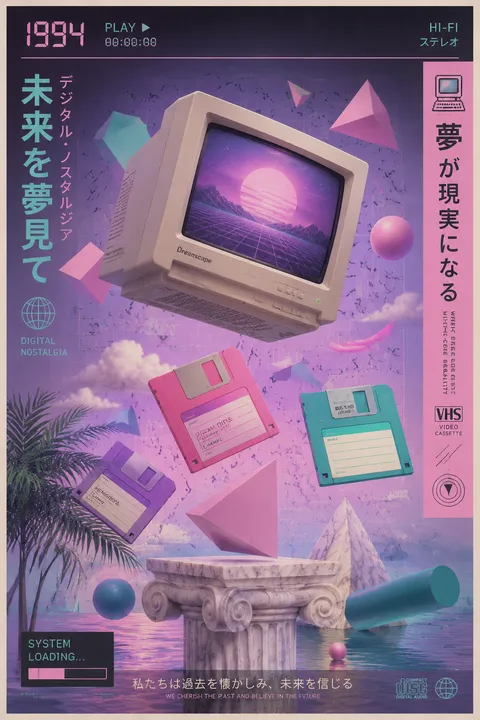
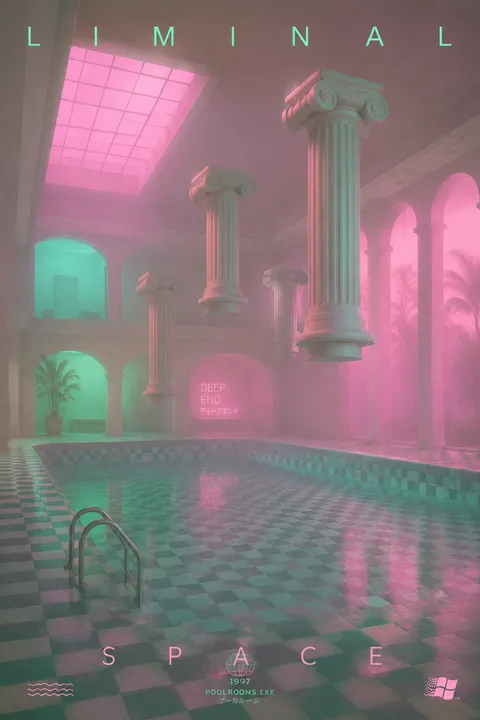
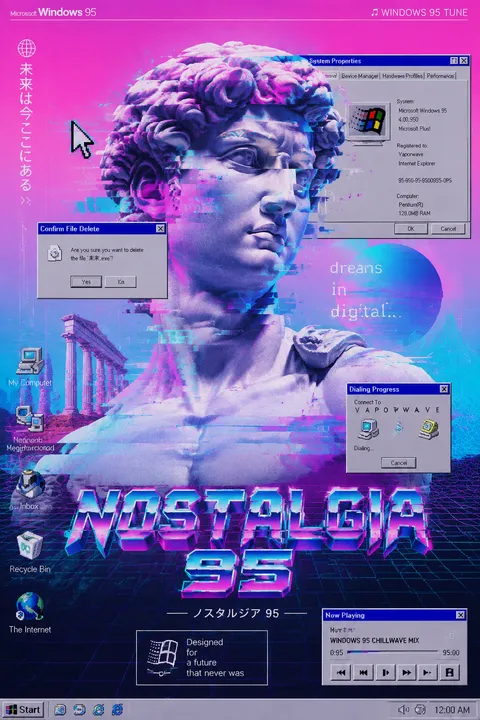
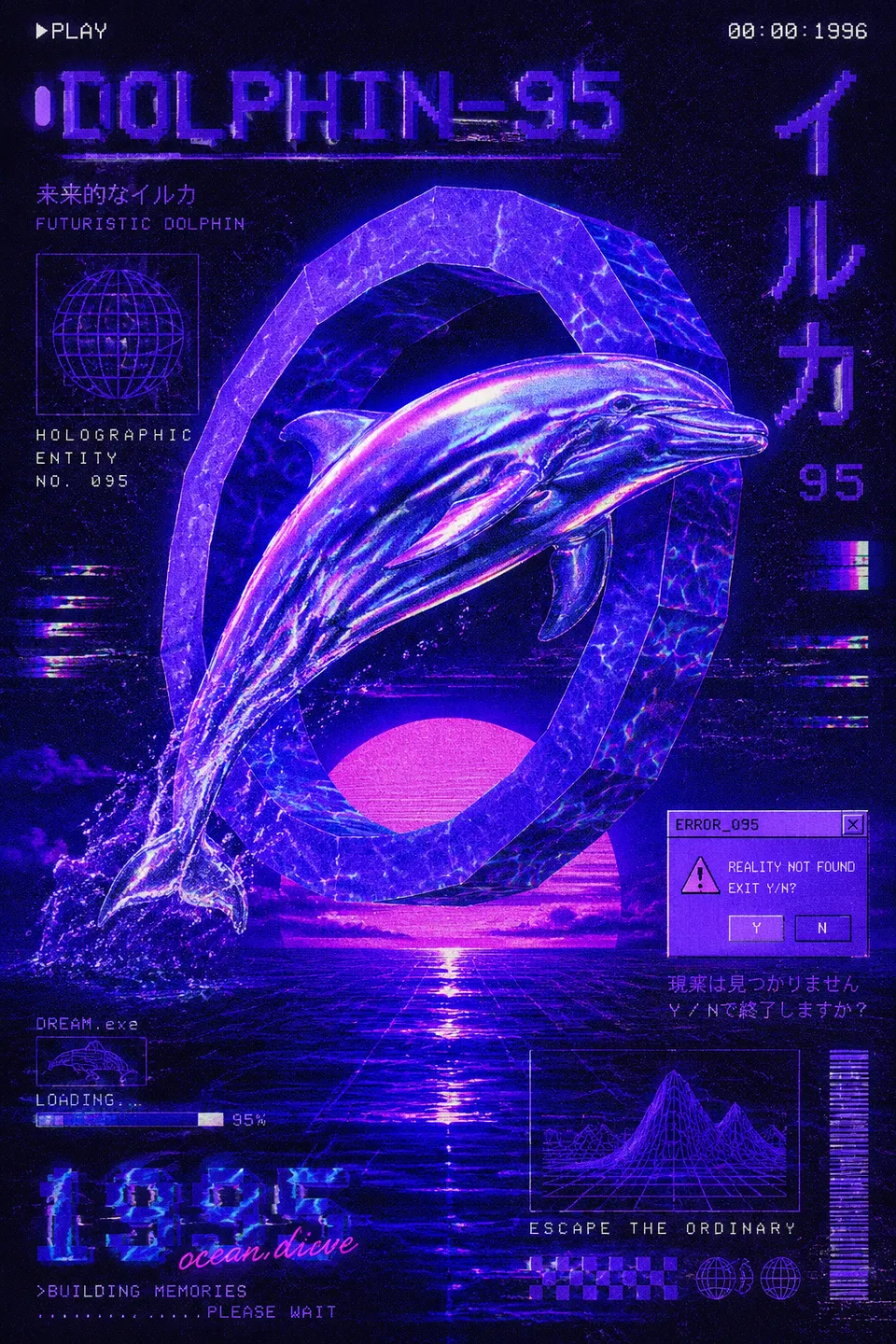
Vaporwave is characterized by its distinctive neon pastel color palette, particularly pink, blue, and purple tones often arranged in gradient overlays. The style draws heavily from 1990s web design, glitch art, anime imagery, and ancient Greek or Roman sculpture. Key visual elements include pixelated graphics, Memphis Design geometric shapes, VHS-style degradation effects, and 3D-rendered objects. Japanese text, tropical imagery like palm trees, and retro technology also feature prominently.
What is the cultural meaning behind vaporwave design?
Vaporwave emerged as both an aesthetic movement and a form of cultural commentary on consumer capitalism and pop culture. The style combines nostalgic elements from the 1980s and 1990s—particularly the height of Japanese economic power and early internet culture—with a melancholic or satirical perspective. By juxtaposing classical imagery with lowbrow modern elements and degraded digital artifacts, vaporwave creates a surreal critique of commercial excess and technological utopianism.
How can I create vaporwave-style designs?
To create vaporwave designs, start with a saturated color palette of neon pinks, aqua blues, and purples. Incorporate retro elements like Greek or Roman busts, old computers, cassette tapes, and tropical imagery. Apply glitch effects, chromatic aberration, and VHS-style filters to create that nostalgic degraded look. Use pixelated text, isometric shapes, and heavy outlines for typography. Adding Japanese characters, sunset imagery, and Memphis Design patterns will enhance the authentic vaporwave feel.
What distinguishes vaporwave from synthwave aesthetics?
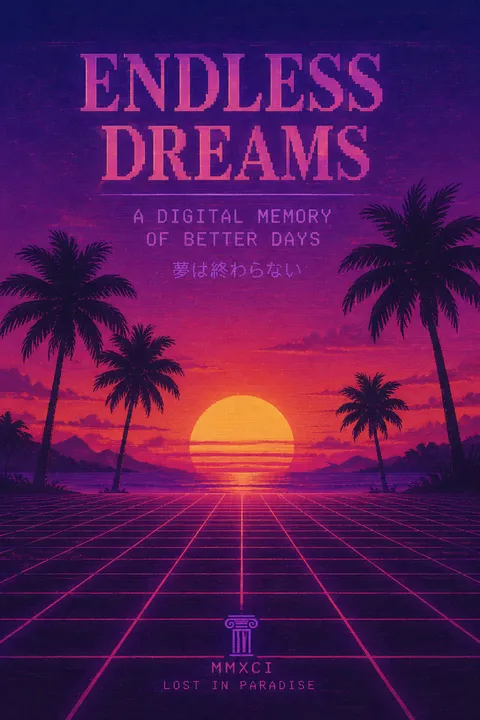
While both vaporwave and synthwave draw from 1980s nostalgia, they differ in tone and visual approach. Vaporwave tends toward pastel colors, surreal imagery, and a more melancholic or ironic mood, often incorporating internet culture and glitch effects. Synthwave leans toward darker, more saturated neon colors, emphasizing retro-futuristic themes like sports cars, cityscapes, and science fiction elements. Synthwave celebrates 80s nostalgia more earnestly, while vaporwave takes a more subversive, deconstructed approach.
Ready to design your next poster?
Create Vaporwave Poster