
Synthwave Posters
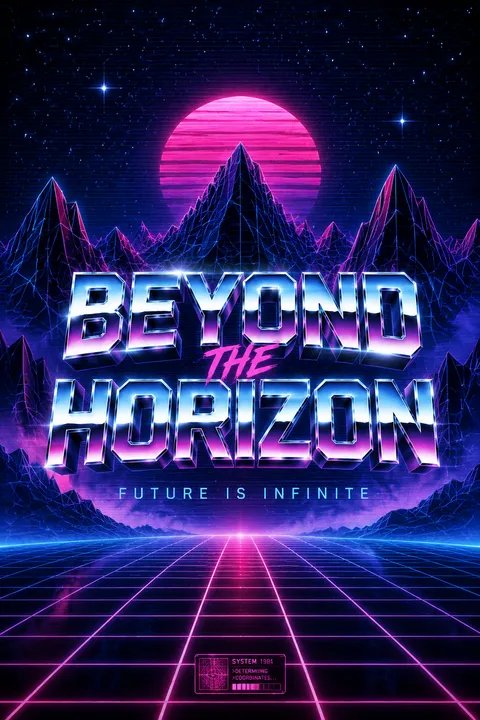
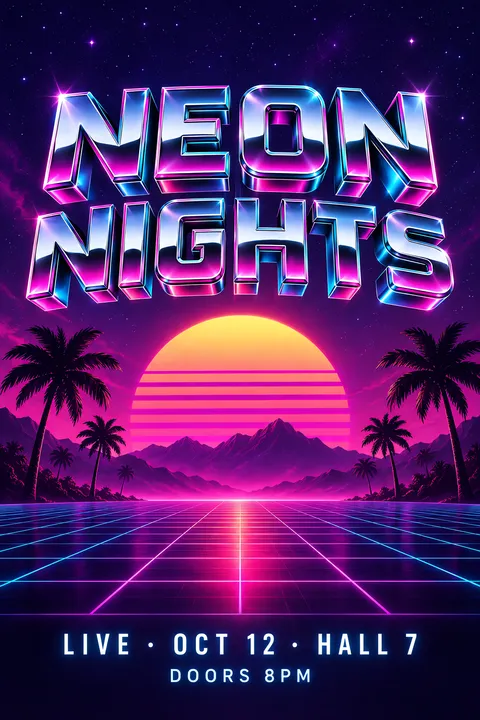
Originating in the late 2000s alongside a revival of 1980s-inspired electronic music by artists like Kavinsky and Carpenter Brut, synthwave draws from the vivid atmosphere of retro film scores and pop culture. Its design philosophy celebrates the era’s technological optimism, reimagining neon-lit landscapes and chrome textures as symbols of a future that remains captivating. Nostalgia and digital artistry combine to propose a vision where past and future merge in energetic harmony.
5 credits for new user registration. No credit card required.
Create Your Own Synthwave Poster
Use our AI generator to design Synthwave posters in seconds with full commercial rights.
Create Synthwave Poster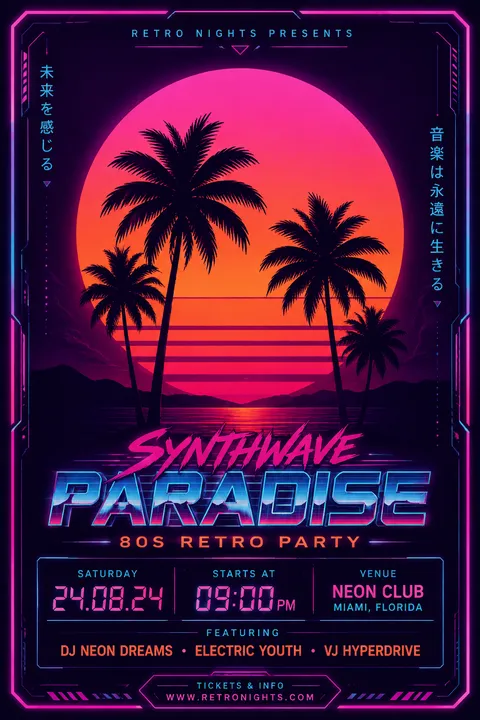
The Art of Synthwave?
Turn Ideas into Art in Seconds
Describe Your Vision
Simply type your idea or concept for the poster.
Select Synthwave Style
Our AI applies the specific Synthwave design rules to your concept.
Customize & Download
Fine-tune colors, add text, and export in high-resolution.
Why Designers Choose Us
The professional choice for AI-generated design
Instant Speed
Results in < 30s
CC0 License
100% Commercial Use
Fully Editable
Layer-by-layer control
High Res
Print-ready quality
About Synthwave Design
History of Synthwave
Design Philosophy
Related Keywords
Synthwave FAQ
Quick answers about designing Synthwave posters.
What defines the synthwave aesthetic?
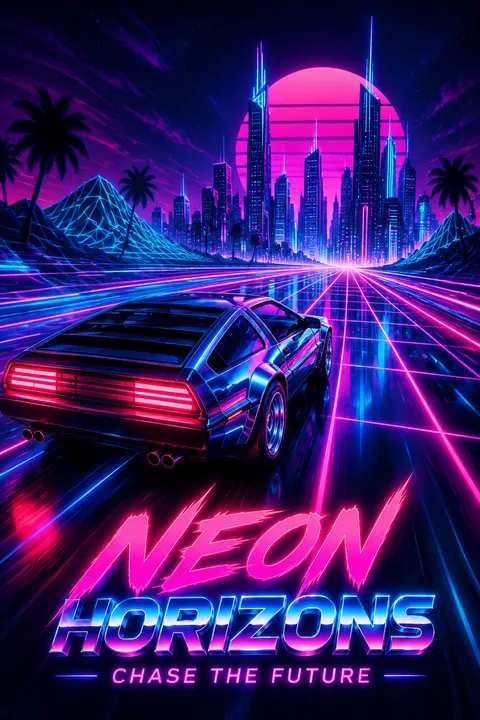
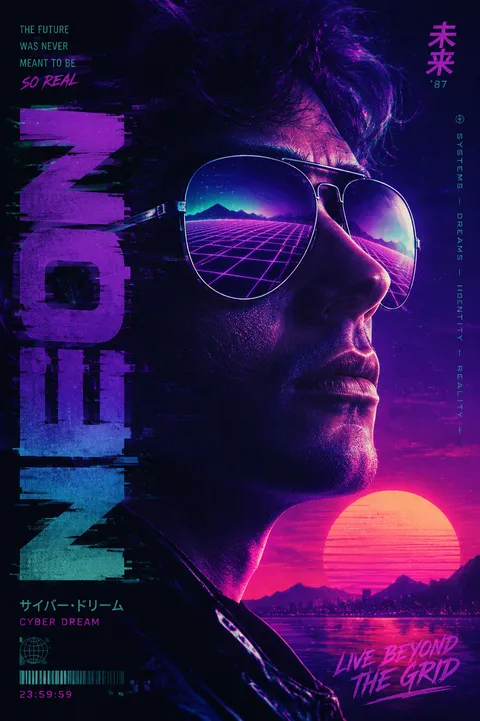
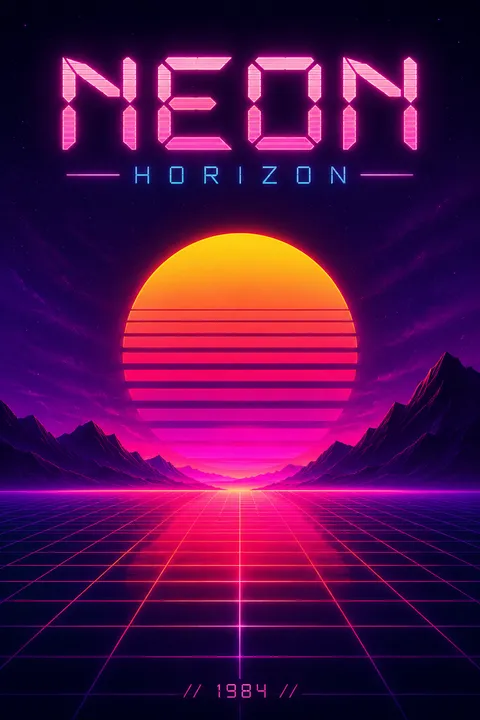
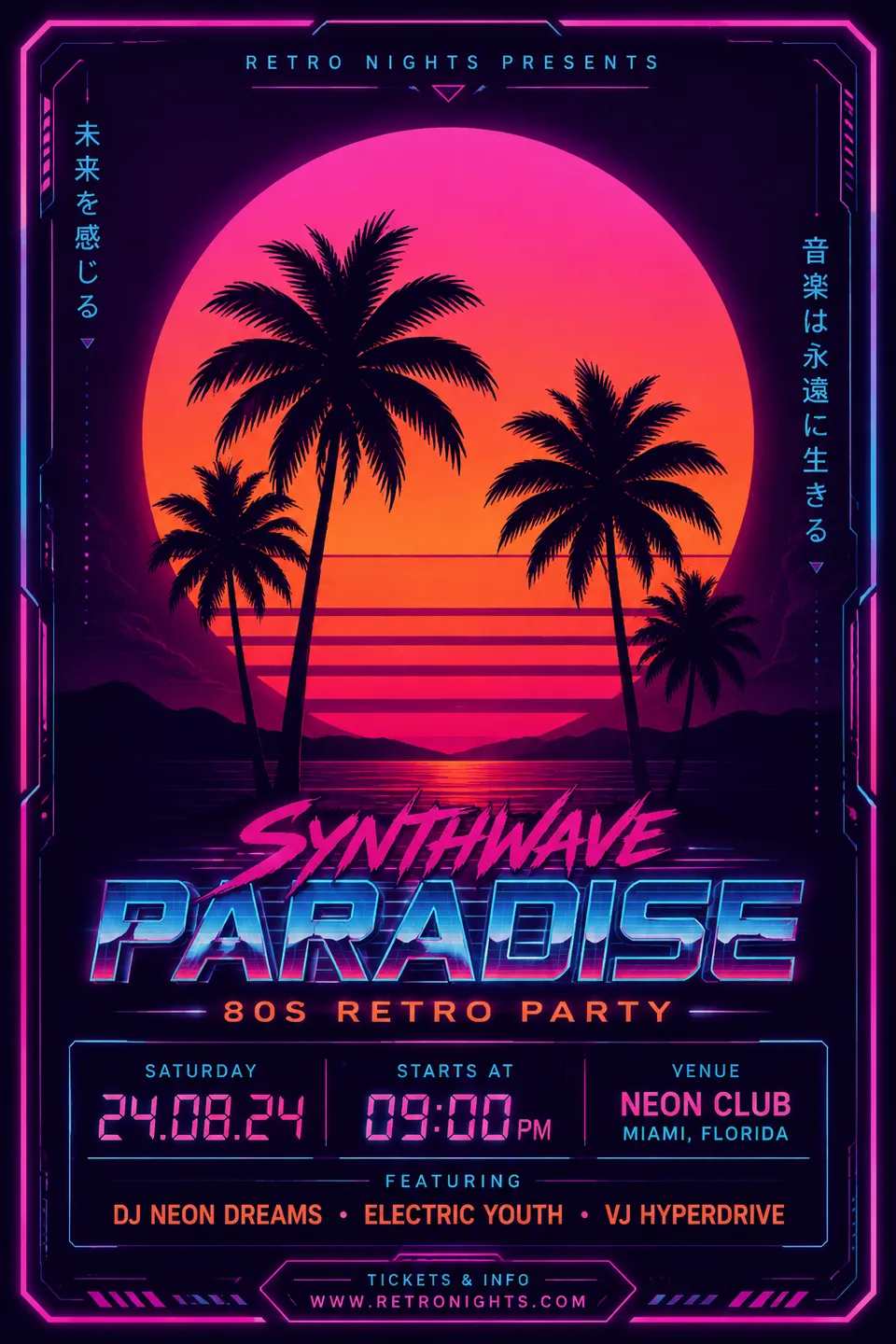
Synthwave creates a hyper-stylized vision of the 1980s filtered through science fiction, action cinema, and arcade culture. The aesthetic features neon colors—magenta, cyan, violet, and deep blue—often in glowing gradients. Iconic elements include the 'Retrosun' (a striped setting sun) and 'laser grid' (a neon perspective plane extending to a vanishing point), representing digital landscapes from early computer graphics.
What visual elements appear in synthwave imagery?
Common elements include wireframe landscapes, futuristic cityscapes with glowing skyscrapers, vintage sports cars like the Ferrari Testarossa and Lamborghini Countach, and retro technology such as VHS tapes and cassette players. Palm tree silhouettes against sunset gradients, chrome text effects, and cybernetic imagery all contribute to the retrofuturistic atmosphere that imagines the future as someone in 1985 might have envisioned it.
How is synthwave different from outrun and retrowave?
While often used interchangeably, these terms have specific meanings within the community. Synthwave is the umbrella genre encompassing the entire movement. Outrun refers specifically to driving-focused visuals and early arcade-style sounds. Retrowave typically describes the more optimistic, vocal-heavy, pop-oriented substyle. All share the neon-soaked 80s aesthetic but emphasize different aspects of the era.
What influences shaped the synthwave visual style?
Films like 'Blade Runner' and 'Tron' heavily influenced synthwave's neon-soaked cityscapes and cyberpunk imagery. 1980s movie soundtracks, video game graphics, and pop culture created the source material that synthwave artists reinterpret. The style doesn't accurately document the 80s but rather curates specific memories of the decade's science fiction aesthetic, creating an idealized vision of retrofuturism.
Ready to design your next poster?
Create Synthwave Poster