
Pointillism Posters
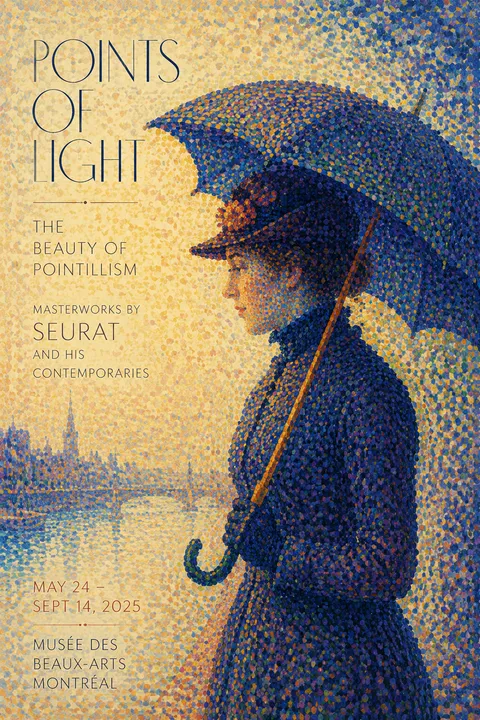
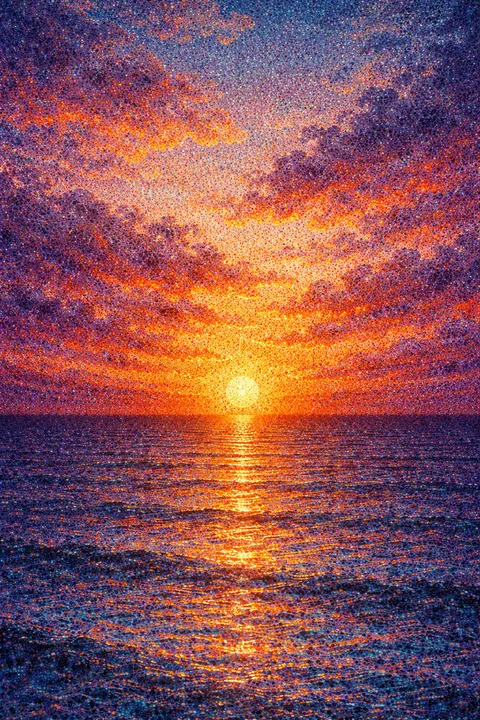
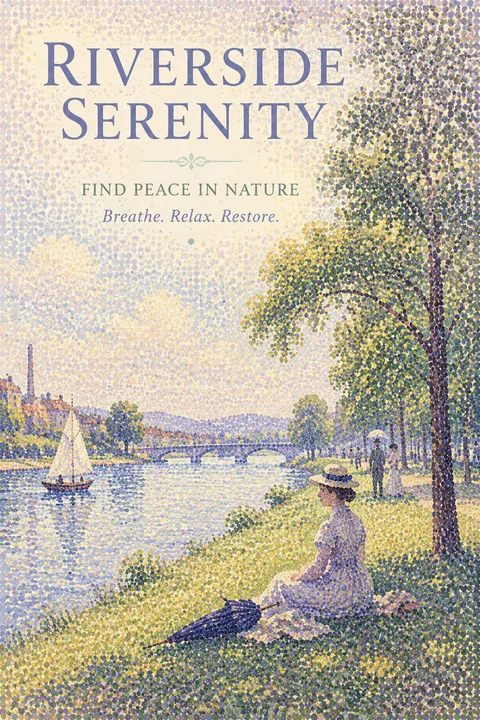
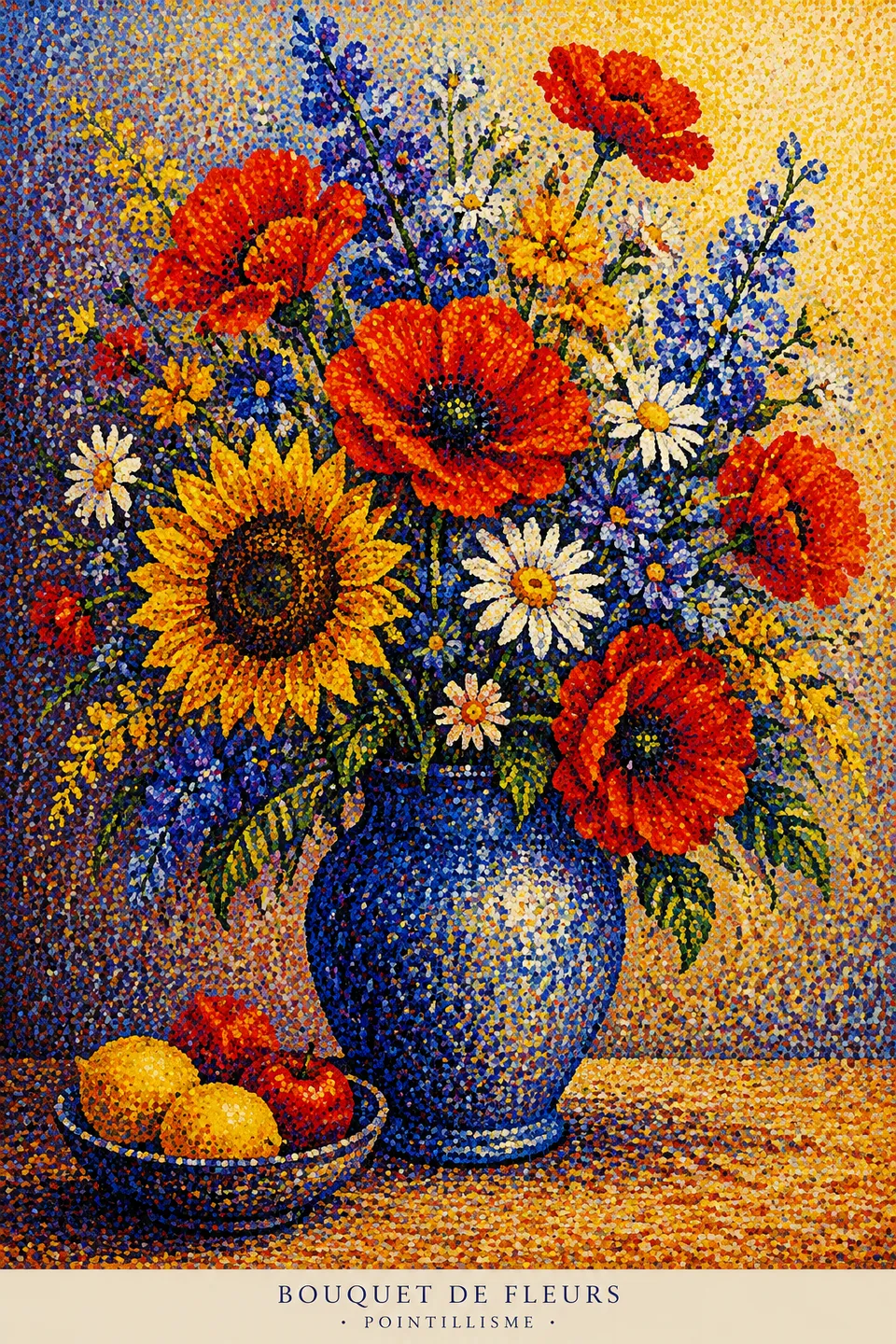
Developed in 1880s France by Georges Seurat and Paul Signac, Pointillism applied scientific color theory to painting, replacing blended pigments with precisely placed dots of pure color. At its core, the philosophy asserts that understanding optical perception enables richer visual experience—systematic placement of discrete elements invites the eye to complete the image, revealing how methodical processes can yield both clarity and luminous complexity.
5 credits for new user registration. No credit card required.
Create Your Own Pointillism Poster
Use our AI generator to design Pointillism posters in seconds with full commercial rights.
Create Pointillism Poster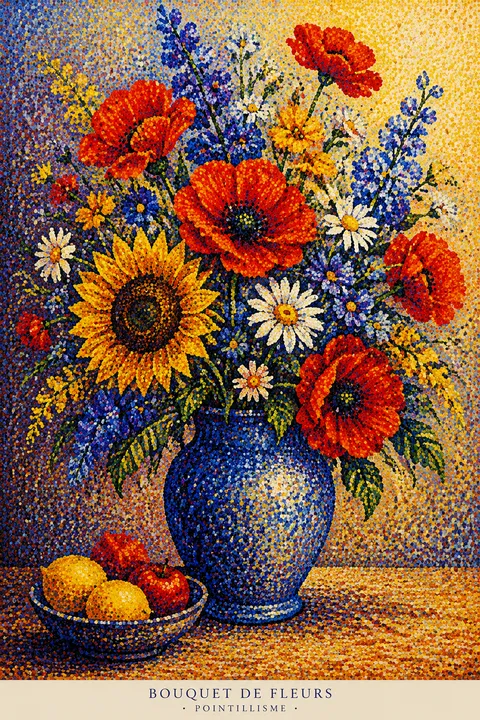

The Art of Pointillism?
Turn Ideas into Art in Seconds
Describe Your Vision
Simply type your idea or concept for the poster.
Select Pointillism Style
Our AI applies the specific Pointillism design rules to your concept.
Customize & Download
Fine-tune colors, add text, and export in high-resolution.
Why Designers Choose Us
The professional choice for AI-generated design
Instant Speed
Results in < 30s
CC0 License
100% Commercial Use
Fully Editable
Layer-by-layer control
High Res
Print-ready quality
About Pointillism Design
History of Pointillism
Design Philosophy
Related Keywords
Pointillism FAQ
Quick answers about designing Pointillism posters.
What is Pointillism and who developed this painting technique?
Pointillism is a painting technique applying small distinct dots of pure color in patterns that optically blend when viewed from distance. Georges Seurat and Paul Signac developed it in Paris around 1886 as a systematic evolution beyond Impressionism. While Seurat preferred the term Divisionism, art critic Felix Feneon's description peinture au point (painting by dots) gave the movement its lasting name.
What scientific principles underlie the Pointillist technique?
Pointillism draws from color theory research by scientists including Michel Eugene Chevreul and Ogden Rood. Chevreul discovered that adjacent colors influence each other's perception, appearing to create new colors when viewed from distance. Neo-Impressionists believed separate touches of unmixed pigment produce greater vibrancy through optical mixture than physically blending paints on a palette, achieving what Seurat called chromoluminarism.
What is the most famous Pointillist artwork?
Georges Seurat's A Sunday Afternoon on the Island of La Grande Jatte (1884-1886) stands as the iconic Pointillist masterpiece. This large-scale depiction of Parisian leisure along the Seine was composed from countless meticulously placed dots over two years. Its debut at the final Impressionist exhibition caused a sensation, effectively launching Neo-Impressionism and altering modern art's direction.
Which notable artists practiced Pointillism?
Beyond founders Seurat and Signac, major practitioners included French artists Henri-Edmond Cross and Maximilien Luce. Impressionist elder Camille Pissarro adopted the technique from 1885-1888, applying dots to rural scenes. Vincent van Gogh, Pablo Picasso, Piet Mondrian, and Wassily Kandinsky all experimented with Pointillist approaches early in their careers before developing their signature styles.
Ready to design your next poster?
Create Pointillism Poster