
Nature Inspired Posters
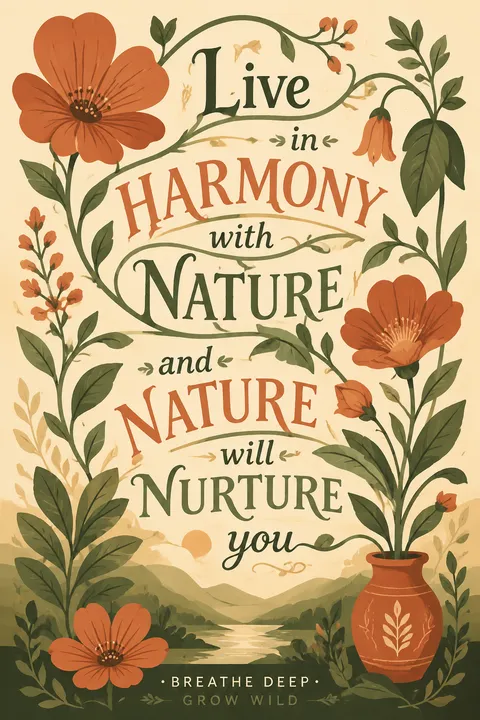
Rooted in artistic traditions from prehistoric cave art to the botanical motifs of William Morris, nature-inspired design gained new momentum in the 1970s amid rising ecological awareness. Its philosophy draws on the forms, colors, and patterns refined by evolution, proposing that design grounded in natural systems fosters harmony and wellbeing while subtly critiquing artificial, unsustainable environments.
5 credits for new user registration. No credit card required.
Create Your Own Nature Inspired Poster
Use our AI generator to design Nature Inspired posters in seconds with full commercial rights.
Create Nature Inspired Poster

Turn Ideas into Art in Seconds
Describe Your Vision
Simply type your idea or concept for the poster.
Select Nature Inspired Style
Our AI applies the specific Nature Inspired design rules to your concept.
Customize & Download
Fine-tune colors, add text, and export in high-resolution.
Why Designers Choose Us
The professional choice for AI-generated design
Instant Speed
Results in < 30s
CC0 License
100% Commercial Use
Fully Editable
Layer-by-layer control
High Res
Print-ready quality
About Nature Inspired Design
History of Nature Inspired
Design Philosophy
Related Keywords
Nature Inspired FAQ
Quick answers about designing Nature Inspired posters.
What is biophilic design and why does it matter?
Biophilic design integrates natural elements into built environments, recognizing humans' innate need to connect with nature. The term 'biophilia,' meaning 'love of life,' was coined by biologist Edward O. Wilson to describe our inherent attraction to living systems. Frank Lloyd Wright pioneered these principles through 'organic architecture,' demonstrating how buildings can harmonize with natural surroundings. Today, this approach addresses the disconnect between modern indoor life and our evolutionary relationship with nature.
What natural elements are essential in nature-inspired design?
Core elements include organic materials like wood, stone, and natural fibers that add texture, warmth, and authenticity. Living greenery—from potted plants to vertical gardens—improves air quality while reinforcing our connection to the natural world. Water features provide visual and auditory calm. Biomorphic forms mimic organic patterns like spirals, botanical motifs, and arches. Natural light and flowing layouts that avoid rigid geometry complete the nature-connected experience.
What health and wellness benefits does nature-inspired design provide?
Nature-inspired design offers measurable benefits: it reduces stress and anxiety by fostering connections with the natural environment. Natural light and biophilic elements boost concentration and productivity, making spaces more effective for work and study. Indoor plants filter harmful pollutants and VOCs, improving respiratory health. These combined effects create environments that support physical wellbeing, mental clarity, and emotional balance through our innate response to natural elements.
How can biomorphic shapes be incorporated into interior design?
Biomorphic design introduces organic shapes that reflect natural patterns rather than strict geometric forms. Instead of right angles and straight edges typical of modern architecture, spaces flow with curved walls, arched doorways, and sculptural furniture inspired by natural forms. These elements can appear in lighting fixtures mimicking seed pods, rugs with organic patterns, or furniture with flowing silhouettes. The key is creating visual harmony that resonates with shapes found in the natural world.
Ready to design your next poster?
Create Nature Inspired Poster