
Mid-Century Modern Posters
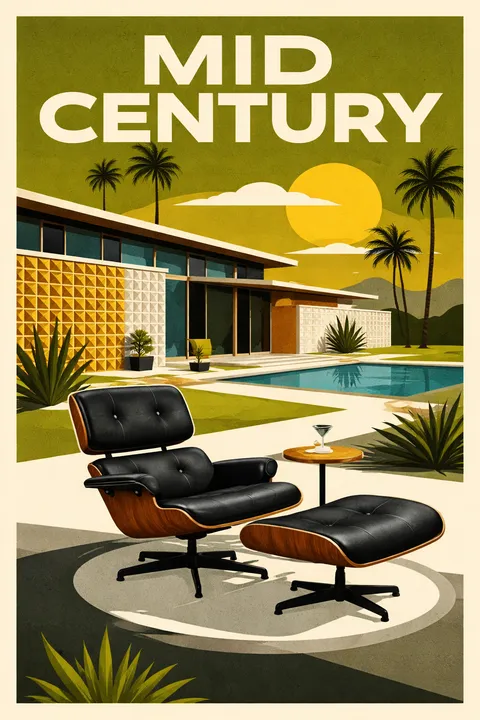
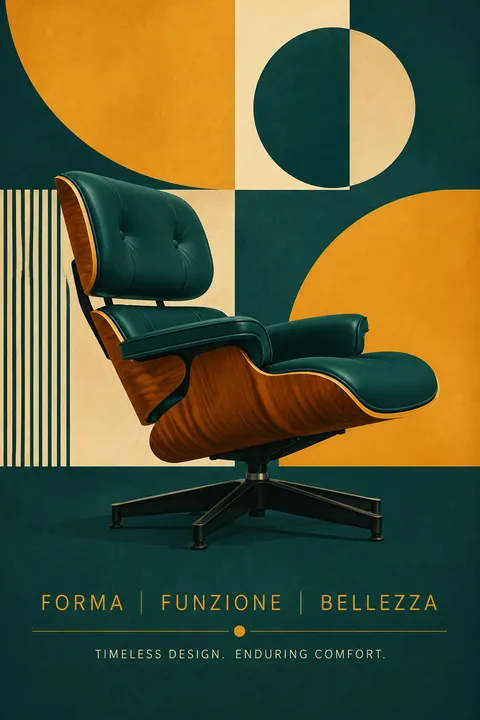
Rising from post-war America between 1945 and 1969, Mid-Century Modern design was shaped by visionaries like Charles and Ray Eames, George Nelson, and Eero Saarinen, who believed good design could uplift everyday life. Its philosophy champions clarity, functionality, and democratic optimism—balancing geometric rigor with organic warmth to create accessible, harmonious compositions that integrate design seamlessly into daily experience.
5 credits for new user registration. No credit card required.
Create Your Own Mid-Century Modern Poster
Use our AI generator to design Mid-Century Modern posters in seconds with full commercial rights.
Create Mid-Century Modern Poster
The Art of Mid-Century Modern?
Turn Ideas into Art in Seconds
Describe Your Vision
Simply type your idea or concept for the poster.
Select Mid-Century Modern Style
Our AI applies the specific Mid-Century Modern design rules to your concept.
Customize & Download
Fine-tune colors, add text, and export in high-resolution.
Why Designers Choose Us
The professional choice for AI-generated design
Instant Speed
Results in < 30s
CC0 License
100% Commercial Use
Fully Editable
Layer-by-layer control
High Res
Print-ready quality
About Mid-Century Modern Design
History of Mid-Century Modern
Design Philosophy
Related Keywords
Mid-Century Modern FAQ
Quick answers about designing Mid-Century Modern posters.
What defines Mid-Century Modern design and what era does it represent?
Mid-Century Modern refers to the design movement spanning roughly 1945 to 1969, heavily influenced by the German Bauhaus school. The style emerged as designers sought to create functional, democratic furniture accessible to everyday families while embracing new manufacturing technologies. Characterized by clean lines, gentle curves, and organic shapes, MCM rejected ornate Victorian predecessors in favor of practical elegance that emphasized both form and function.
What materials are typically used in Mid-Century Modern furniture?
MCM design celebrates a distinctive blend of natural and manufactured materials. Traditional woods like teak, walnut, and oak provide warmth and authenticity, while innovative materials such as molded plywood, fiberglass, and plastic allowed for revolutionary forms. Leather, brass, glass, and marble add sophistication to designs. The combination of organic elements with industrial materials reflects the era's optimism about technological progress harmonizing with nature.
What color palette characterizes Mid-Century Modern interiors?
The MCM palette balances neutral foundations with bold accent colors drawn from nature. Earth tones including warm browns, mustard yellows, and burnt oranges create warmth, while aquamarine, teal, and olive green add freshness. White, black, and natural wood tones serve as grounding neutrals. Rather than overwhelming spaces, vibrant hues like turquoise and tangerine appear strategically as accent pieces to create visual interest and focal points.
Who were the influential designers of the Mid-Century Modern movement?
The movement produced legendary designers whose work remains iconic today. Charles and Ray Eames created the revolutionary Eames Lounge Chair in 1956, still manufactured over 60 years later. Other pivotal figures include George Nelson, Arne Jacobsen, Isamu Noguchi, and Eero Saarinen. These designers, many German emigres who fled to America following World War II, transformed everyday furniture into sculptural art while maintaining practicality and comfort.
Ready to design your next poster?
Create Mid-Century Modern Poster