
Liquid Chrome Posters
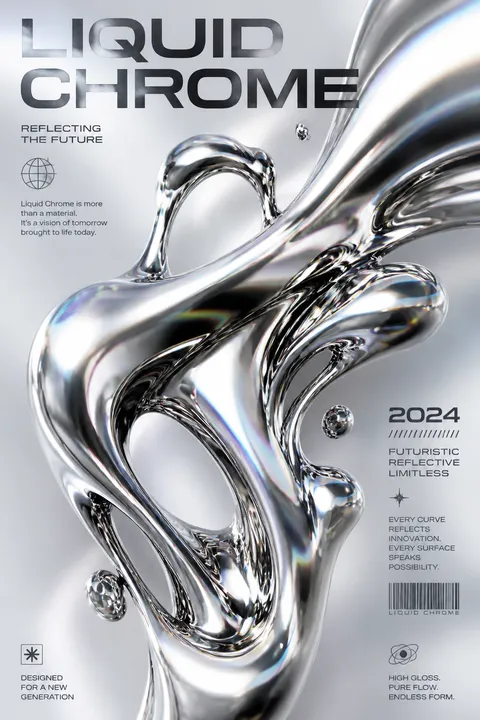
Liquid chrome design surfaced in the late 2010s, propelled by advances in 3D rendering software and a fascination with hyperreal, metallic simulations championed by artists like David Rudnick and Jonathan Zawada. Its philosophy revels in digital artifice, intentionally crafting impossible materials and forms that defy physical laws. The style foregrounds reflective surfaces and organic distortion, celebrating the unique aesthetic possibilities of computer-generated imagery.
5 credits for new user registration. No credit card required.
Create Your Own Liquid Chrome Poster
Use our AI generator to design Liquid Chrome posters in seconds with full commercial rights.
Create Liquid Chrome Poster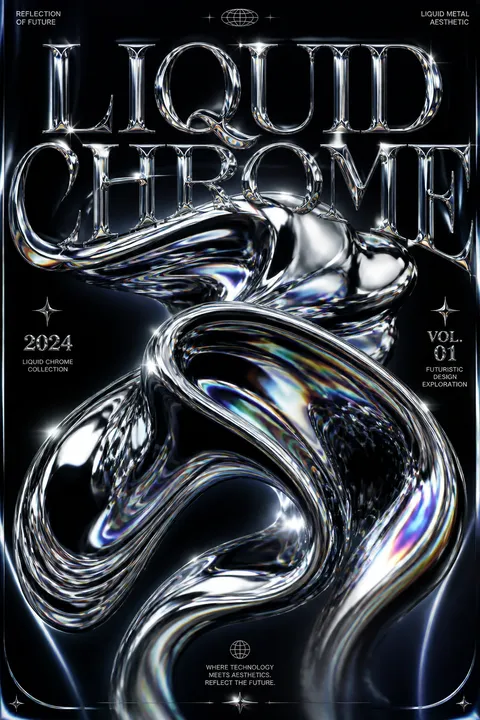


The Art of Liquid Chrome?
Turn Ideas into Art in Seconds
Describe Your Vision
Simply type your idea or concept for the poster.
Select Liquid Chrome Style
Our AI applies the specific Liquid Chrome design rules to your concept.
Customize & Download
Fine-tune colors, add text, and export in high-resolution.
Why Designers Choose Us
The professional choice for AI-generated design
Instant Speed
Results in < 30s
CC0 License
100% Commercial Use
Fully Editable
Layer-by-layer control
High Res
Print-ready quality
About Liquid Chrome Design
History of Liquid Chrome
Design Philosophy
Related Keywords
Liquid Chrome FAQ
Quick answers about designing Liquid Chrome posters.
What defines the liquid chrome aesthetic in design?
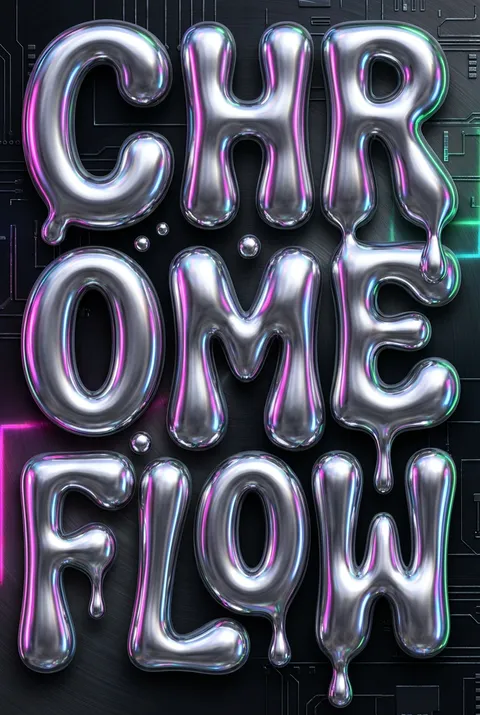
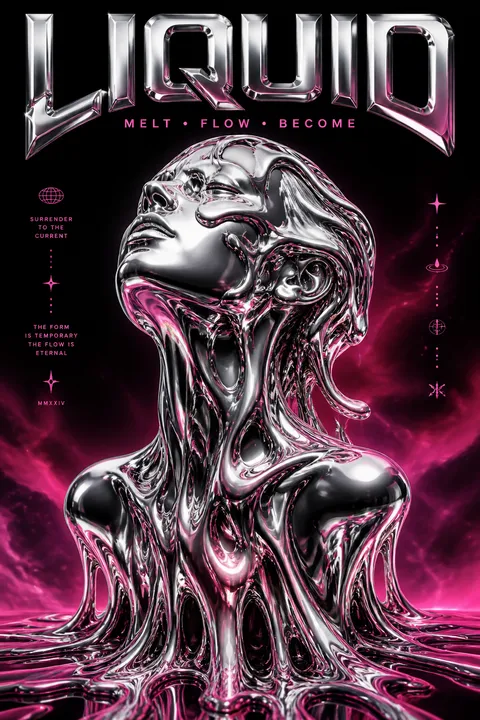
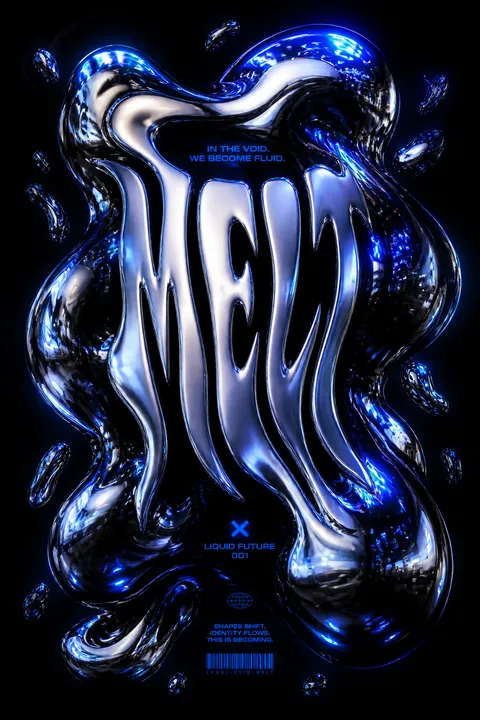
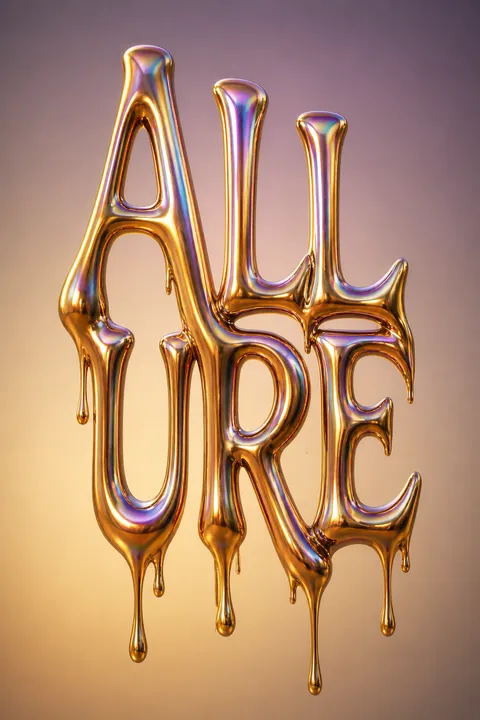
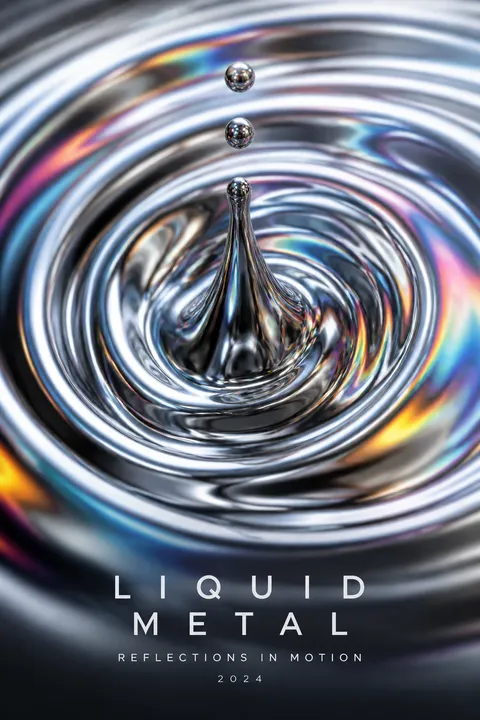
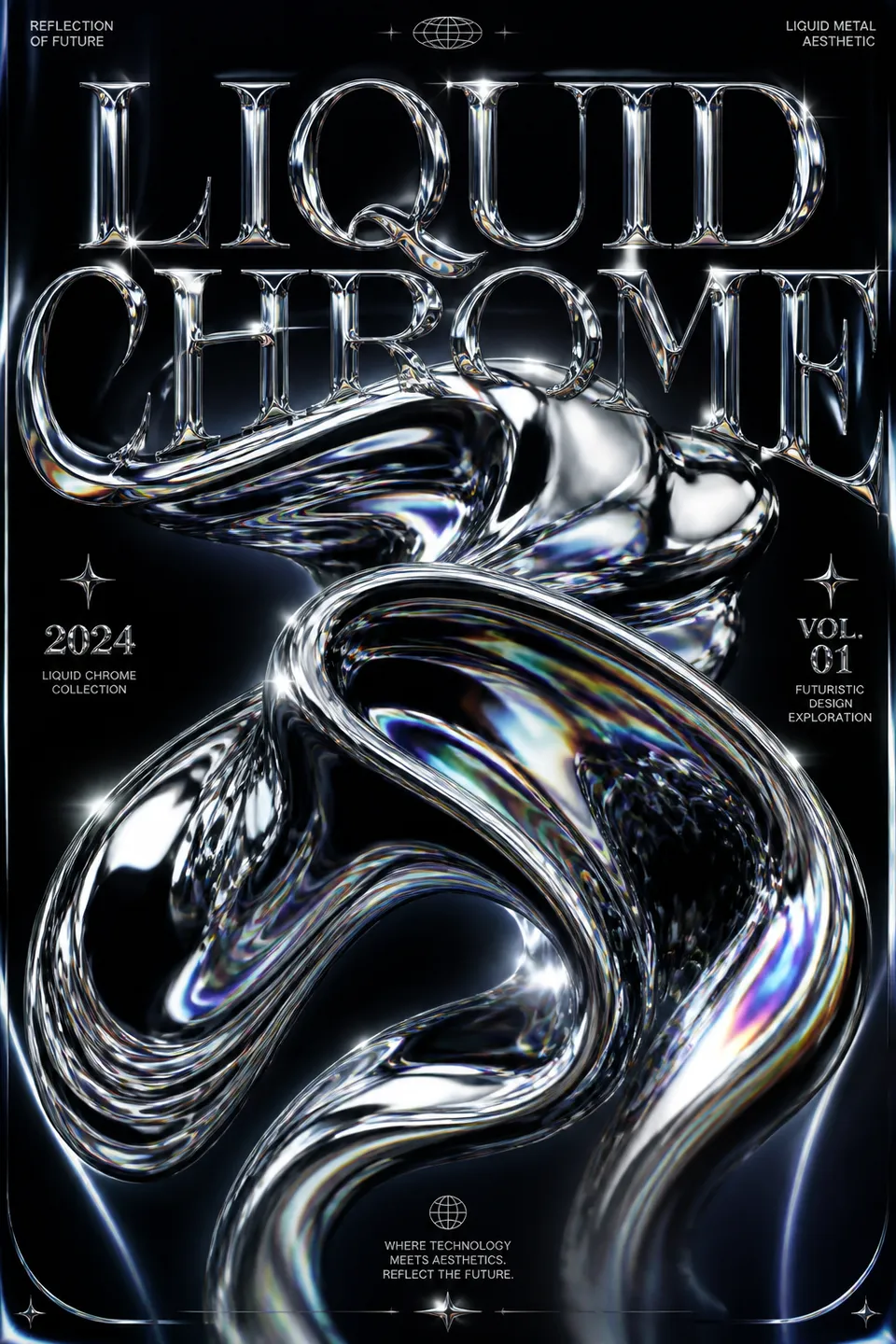
Liquid chrome creates a futuristic gleam through 3D metallic textures that appear to flow like mercury or molten metal. The style features sinuous, reflective surfaces with gleaming highlights and deep shadows that suggest fluid metal caught mid-movement. While silver is the default, the aesthetic extends to iridescent rainbow effects, matte black metallic finishes, and colorful chrome variations that maintain that distinctive liquid quality.
What cultural movements influenced liquid chrome design?
The style draws from 1980s-90s sci-fi aesthetics, particularly the T-1000 from Terminator 2, which became an iconic reference for liquid metal effects. Cyberpunk and early digital art contributed industrial metallic textures. More recently, acid graphics pioneered by designers like David Rudnick layered intricate geometries with chrome effects. The aesthetic blends retro-futurism with contemporary digital capabilities.
How is the liquid chrome effect created digitally?
Artists achieve liquid chrome through 3D rendering software that simulates metallic materials with high reflectivity and complex lighting. Simpler approaches use Photoshop filters, gradient maps, and bevel/emboss effects to approximate the look. Key elements include sharp highlights, gradient reflections suggesting environmental mapping, smooth flowing forms, and careful attention to how light wraps around curved metallic surfaces.
Where does liquid chrome appear in contemporary design?
Liquid chrome dominates music industry visuals, appearing in album art for artists like Lady Gaga, Rosalía, and Rina Sawayama. Fashion brands and streetwear labels favor chrome typography for its attention-grabbing impact. The style thrives in youth culture, sneaker branding, and experimental web design. Often paired with brutalist typography, liquid chrome creates deliberately striking, sometimes illegible designs that prioritize visual impact over conventional readability.
Ready to design your next poster?
Create Liquid Chrome Poster