
Hippie Posters
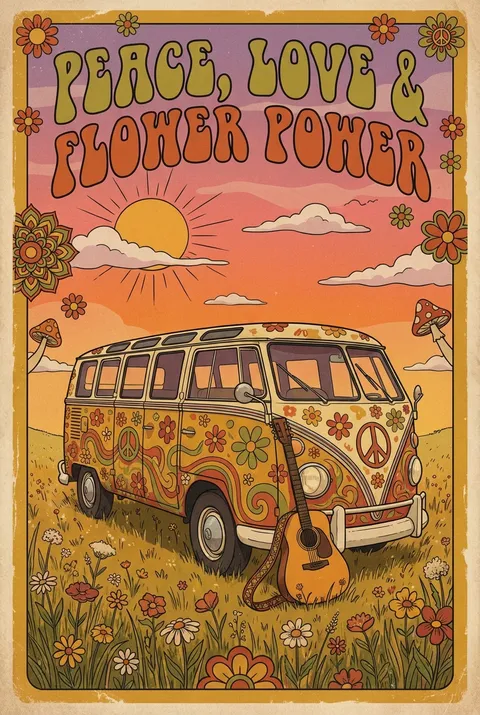
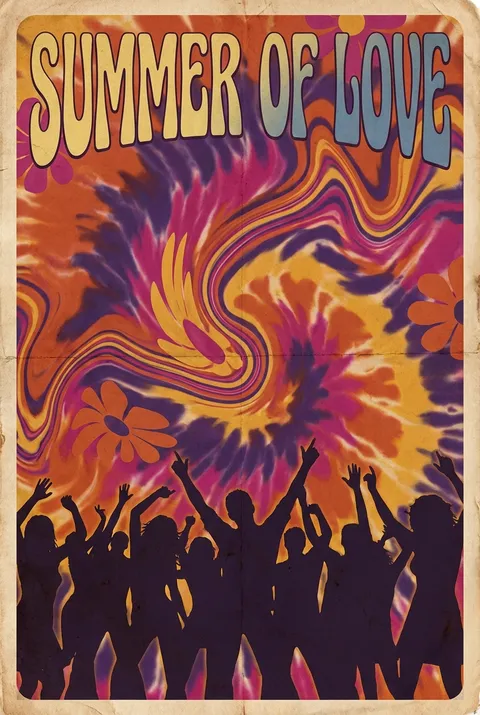
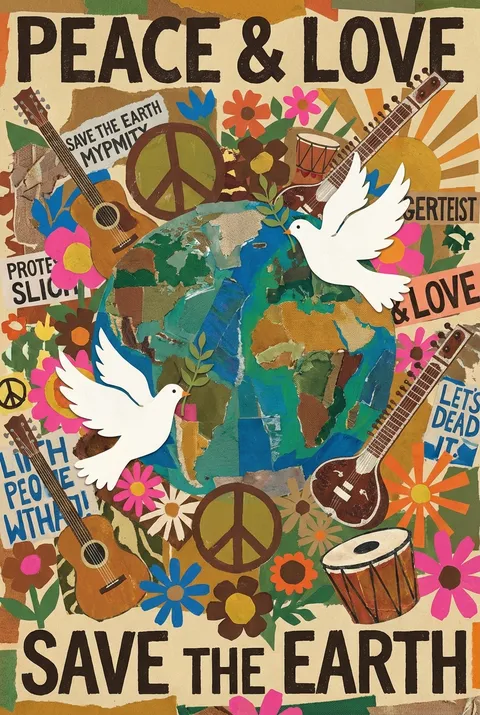
Hippie visual culture emerged in mid-1960s San Francisco as an outgrowth of American counterculture, shaped by influences ranging from Art Nouveau to South Asian textiles and psychedelic experimentation. Rejecting competitive individualism, its philosophy centers on communal harmony and organic connection to nature, favoring handmade, optimistic imagery that opposes commercial conformity and envisions utopian alternatives rooted in peace, love, and authentic living.
5 credits for new user registration. No credit card required.
Create Your Own Hippie Poster
Use our AI generator to design Hippie posters in seconds with full commercial rights.
Create Hippie Poster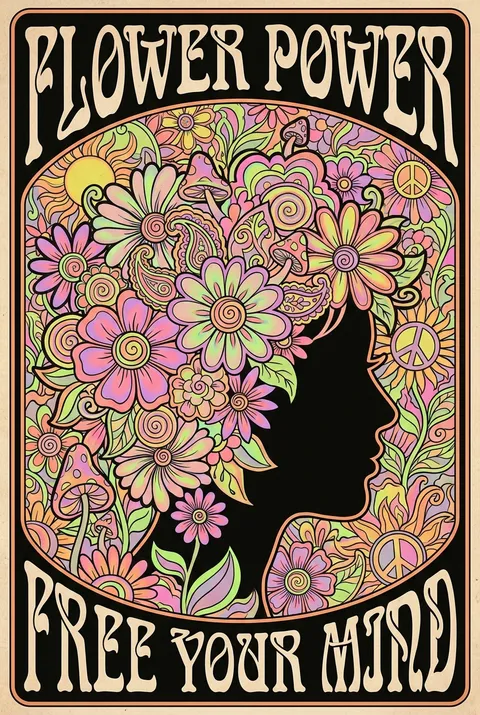

Turn Ideas into Art in Seconds
Describe Your Vision
Simply type your idea or concept for the poster.
Select Hippie Style
Our AI applies the specific Hippie design rules to your concept.
Customize & Download
Fine-tune colors, add text, and export in high-resolution.
Why Designers Choose Us
The professional choice for AI-generated design
Instant Speed
Results in < 30s
CC0 License
100% Commercial Use
Fully Editable
Layer-by-layer control
High Res
Print-ready quality
About Hippie Design
History of Hippie
Design Philosophy
Related Keywords
Hippie FAQ
Quick answers about designing Hippie posters.
What defines the hippie design style and its origins?
The hippie design style emerged from San Francisco's Haight-Ashbury neighborhood in the 1960s, where young people explored alternative lifestyles and challenged social norms. At its heart was the psychedelic experience—visuals created by artists connected to the counterculture movement. The style first appeared as concert posters, using vivid colors, spontaneous shapes, and bombastic imagery to capture the revolutionary spirit of the era.
What are the key visual characteristics of hippie psychedelic design?
Hippie design features richly saturated colors in glaring contrast, creating what Victor Moscoso called 'vibrating colors' using opposite color wheel hues of equal value. Other hallmarks include elaborately ornate Art Nouveau-inspired lettering, strongly symmetrical compositions, rubber-like distortions, kaleidoscopic patterns, and free-flowing lines. The typography often appears to melt or move, challenging legibility while creating mesmerizing visual effects.
Who were the influential artists of the hippie poster movement?
The 'Big Five' dominated San Francisco's psychedelic poster scene: Wes Wilson invented the melting psychedelic font style synonymous with the era; Victor Moscoso brought formal training and vibrating color theory; Rick Griffin, Alton Kelley, and Stanley Mouse contributed iconic imagery. Bonnie MacLean and Bob Schnepf also created significant work. These artists drew inspiration from Art Nouveau, Victorian imagery, Dada, comic books, and Pop Art.
How can hippie design aesthetics be applied in contemporary projects?
Modern applications work well for music festivals, wellness brands, and projects wanting to evoke freedom and creativity. Use intense color vibration by pairing complementary colors of equal brightness. Incorporate flowing Art Nouveau curves and ornate hand-lettering. Add symmetrical compositions and kaleidoscopic patterns. The style flourished from 1966-1972, so referencing authentic period examples helps capture the genuine countercultural energy while adapting it for today's audiences.
Ready to design your next poster?
Create Hippie Poster