
Geometric Posters
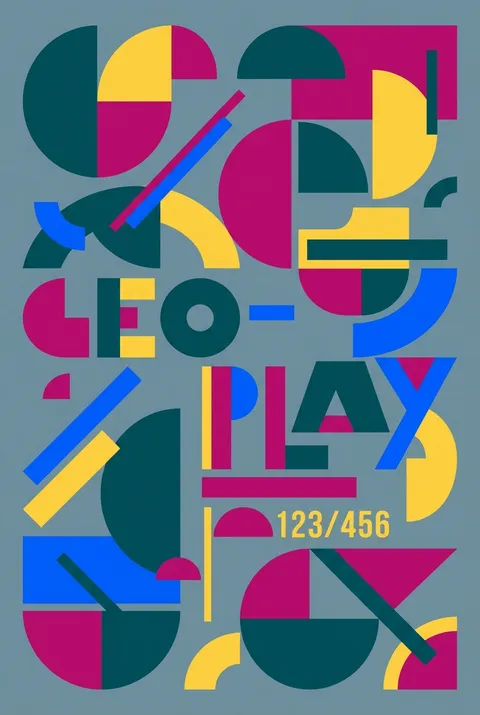
Rooted in mathematical traditions from ancient Greece to Islamic art, geometric design emerged as a distinct movement in early twentieth-century abstraction with figures like Malevich, Mondrian, and the Bauhaus school. Its philosophy centers on the belief that pure geometric forms possess inherent visual and psychological meaning, using proportion, repetition, and spatial relationships to communicate order and clarity without representational imagery.
5 credits for new user registration. No credit card required.
Create Your Own Geometric Poster
Use our AI generator to design Geometric posters in seconds with full commercial rights.
Create Geometric Poster

Turn Ideas into Art in Seconds
Describe Your Vision
Simply type your idea or concept for the poster.
Select Geometric Style
Our AI applies the specific Geometric design rules to your concept.
Customize & Download
Fine-tune colors, add text, and export in high-resolution.
Why Designers Choose Us
The professional choice for AI-generated design
Instant Speed
Results in < 30s
CC0 License
100% Commercial Use
Fully Editable
Layer-by-layer control
High Res
Print-ready quality
About Geometric Design
History of Geometric
Design Philosophy
Related Keywords
Geometric FAQ
Quick answers about designing Geometric posters.
What is geometric design and what makes it distinctive?
Geometric design is a visual approach that uses fundamental shapes—circles, squares, triangles, rectangles, hexagons—as primary compositional elements. These shapes are arranged with mathematical precision to create harmonious, balanced compositions. The style emphasizes clean lines, symmetry, proportion, and often follows systematic frameworks like grid systems or the golden ratio to achieve visual coherence and aesthetic appeal.
What psychological effects do different geometric shapes create?
Each geometric shape communicates distinct emotions and meanings. Squares and rectangles convey stability, security, and reliability. Circles represent continuity, unity, and wholeness since they have no beginning or end. Triangles suggest energy, direction, and dynamism, making them popular in logos. By understanding shape psychology, designers can strategically select forms that reinforce their intended message and create appropriate emotional responses.
What are the main types of geometric patterns used in design?
Common geometric patterns include tessellations (interlocking shapes that tile without gaps), fractals (self-similar patterns at different scales), symmetrical designs (mirror or rotational balance), and modular patterns (repeated units that combine into larger compositions). Low-poly patterns, where multiple triangular shapes mesh together, have become especially popular in contemporary digital design for creating abstract illustrations and backgrounds.
Why are geometric patterns so effective in graphic design?
Geometric patterns naturally attract human attention due to our innate preference for order and structure. The repetition and rhythm of geometric elements create visual harmony while establishing clear hierarchy. Combined with thoughtful color choices, geometric design produces engaging content that feels both modern and timeless. The style's mathematical foundation also makes it infinitely scalable and adaptable across different applications.
Ready to design your next poster?
Create Geometric Poster