
Fillmore Poster Posters
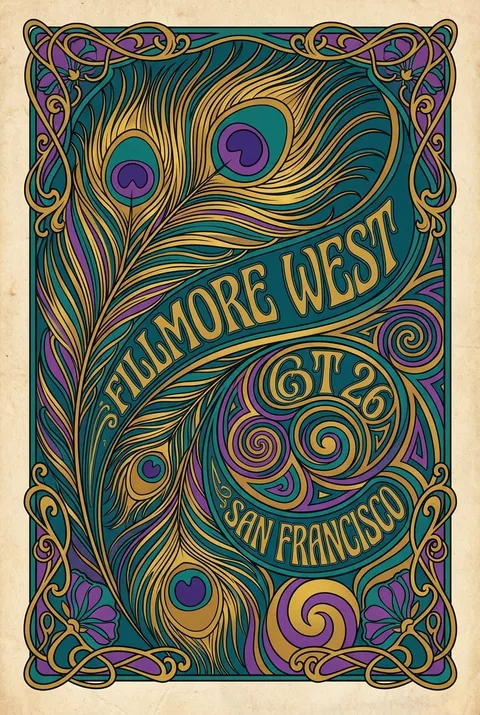
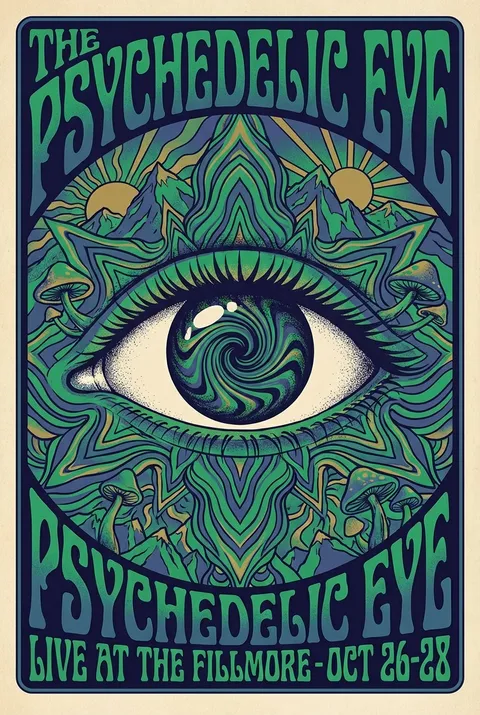
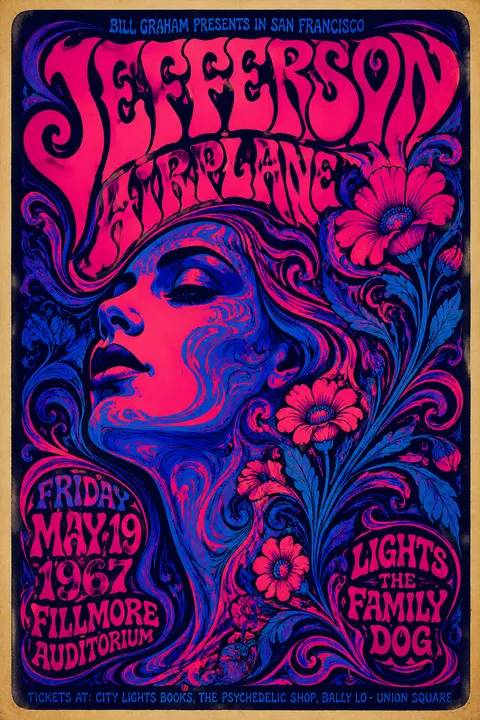
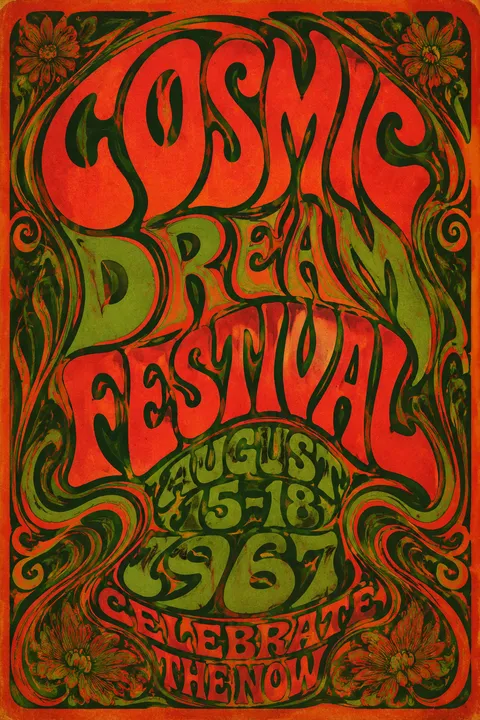
The Fillmore poster style emerged in San Francisco in 1966, shaped by a close-knit group of artists creating concert posters for the psychedelic rock scene at Bill Graham’s Fillmore Auditorium. Prioritizing immersive experience over straightforward communication, this approach revels in layered visuals and deliberate illegibility, inviting viewers to linger and discover. Fillmore design seeks to evoke altered states of perception through fluid typography, vibrating color, and dense, organic composition.
5 credits for new user registration. No credit card required.
Create Your Own Fillmore Poster Poster
Use our AI generator to design Fillmore Poster posters in seconds with full commercial rights.
Create Fillmore Poster Poster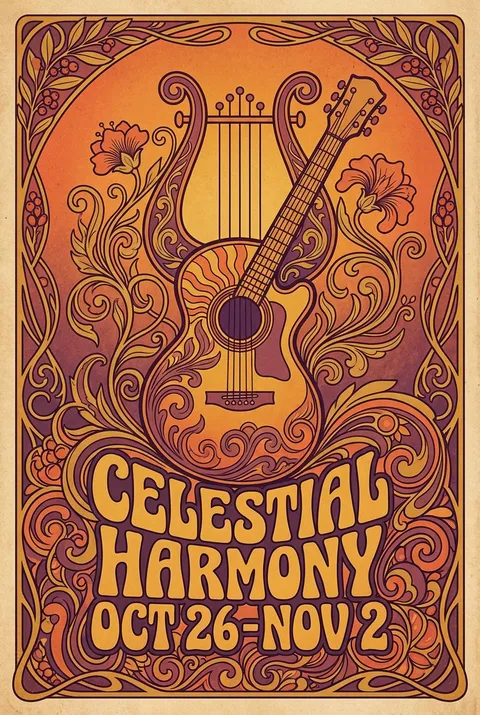
Turn Ideas into Art in Seconds
Describe Your Vision
Simply type your idea or concept for the poster.
Select Fillmore Poster Style
Our AI applies the specific Fillmore Poster design rules to your concept.
Customize & Download
Fine-tune colors, add text, and export in high-resolution.
Why Designers Choose Us
The professional choice for AI-generated design
Instant Speed
Results in < 30s
CC0 License
100% Commercial Use
Fully Editable
Layer-by-layer control
High Res
Print-ready quality
About Fillmore Poster Design
History of Fillmore Poster
Design Philosophy
Related Keywords
Fillmore Poster FAQ
Quick answers about designing Fillmore Poster posters.
What is Fillmore poster style and where did it originate?
Fillmore poster style refers to the psychedelic concert posters created for dance concerts at San Francisco's Fillmore Auditorium between 1965 and 1971. Pioneered by Wes Wilson and other artists like Rick Griffin and Victor Moscoso, this style was born from the counterculture movement and was used to advertise performances by bands like the Grateful Dead and Jefferson Airplane. The style drew heavily from Art Nouveau, featuring flowing forms and ornate design elements.
What are the key visual characteristics of Fillmore posters?
Fillmore posters are defined by several distinctive elements: richly saturated colors in high contrast combinations, elaborately ornate hand-lettering that appears to melt or move, strongly symmetrical compositions, and surreal or bizarre imagery. The typography often incorporates flowing, organic forms inspired by Art Nouveau artists like Alphonse Mucha, making the text itself an integral part of the artistic expression rather than merely functional.
Why were Fillmore posters considered revolutionary for graphic design?
Fillmore posters broke new ground by prioritizing artistic expression over advertising functionality. Unlike traditional commercial posters that emphasized readability and clear messaging, these designs intentionally made text difficult to read, forcing viewers to engage more deeply with the artwork. This shift established posters as legitimate art forms and influenced how designers approach the balance between aesthetic impact and communication.
How can I create designs inspired by the Fillmore poster aesthetic?
To capture the Fillmore poster spirit, focus on vibrant, high-contrast color palettes with saturated hues. Incorporate flowing, organic lettering that integrates with your imagery rather than sitting separately. Use symmetrical compositions and consider adding psychedelic elements like swirling patterns, distorted forms, and nature-inspired motifs. Drawing inspiration from Art Nouveau's decorative approach will help achieve that authentic 1960s San Francisco vibe.
Ready to design your next poster?
Create Fillmore Poster Poster