Share your poster to Community. Get likes, climb the leaderboard, earn credits.

View Leaderboard
/
50,000 Posters Generated Today

Deco Moderne Posters

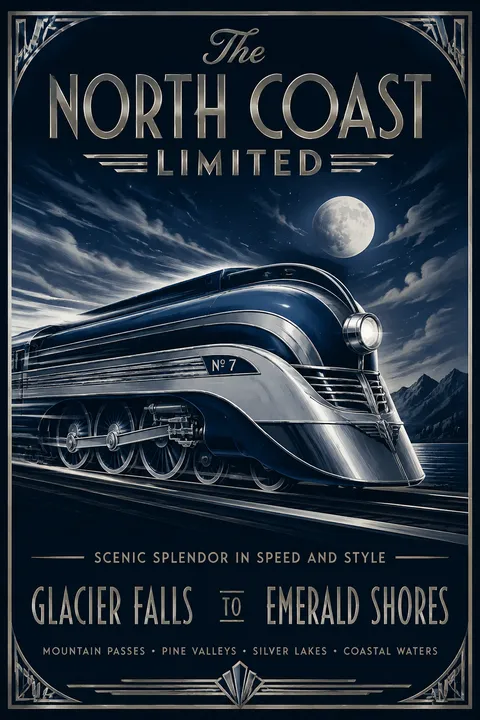
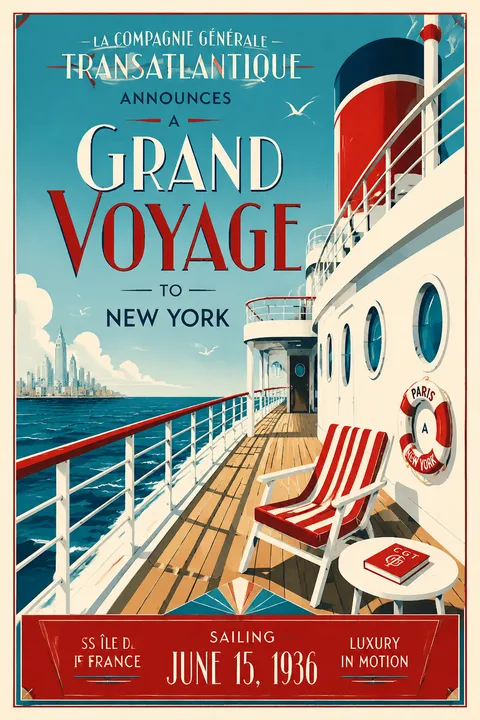
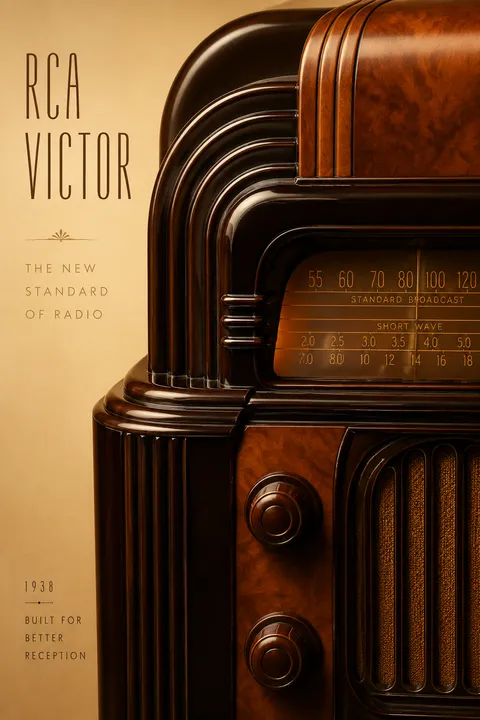
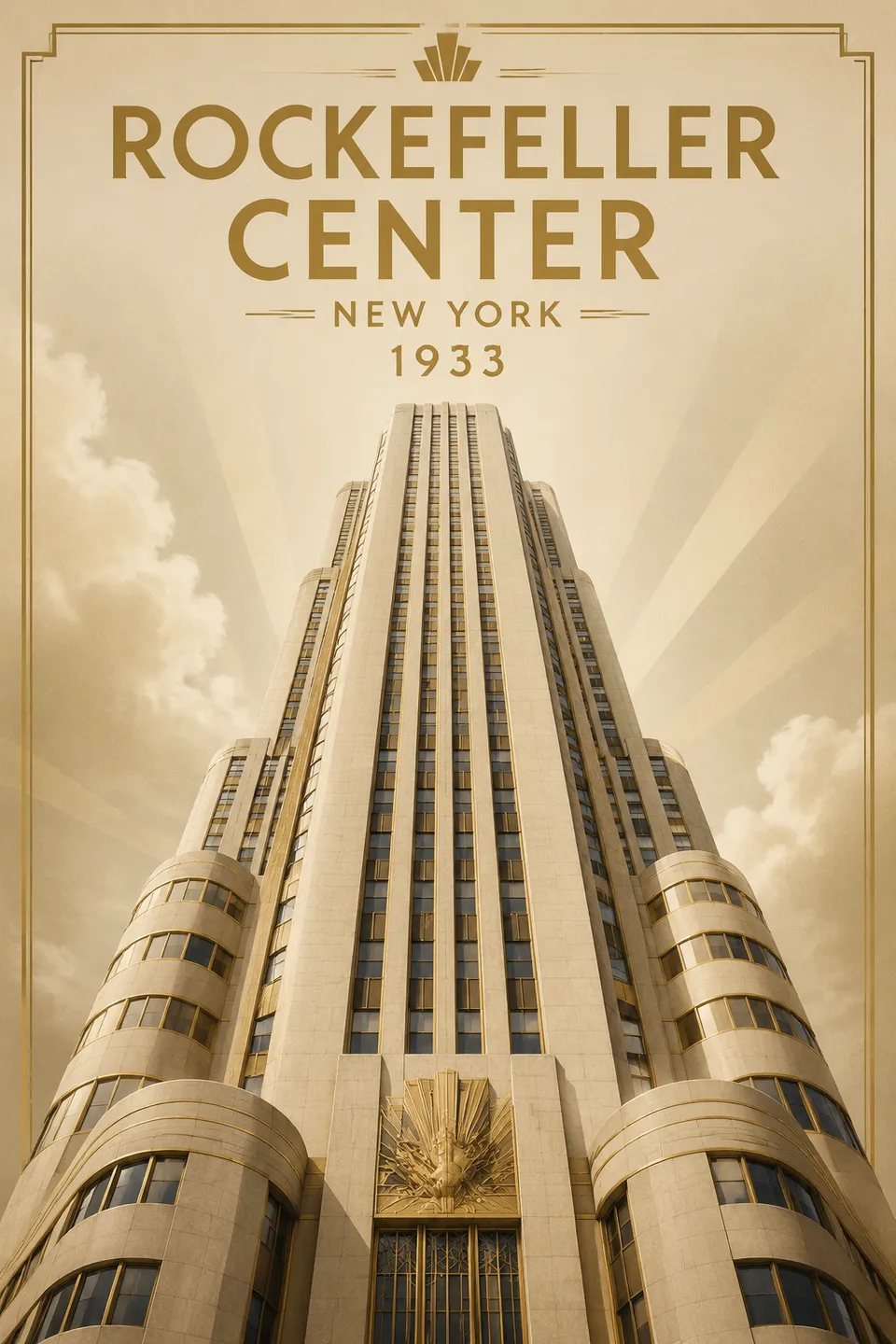
Deco Moderne arose in the early 1930s as Art Deco adapted to Depression-era realities and the growing influence of Modernism, with designers like Norman Bel Geddes and Raymond Loewy championing streamlined forms inspired by industry and transportation. The style’s philosophy asserts that sophistication and efficiency are not opposites—streamlining is seen as a path to elegance, preserving visual pleasure while embracing honest, functional materials and a spirit of optimistic progress.

5 credits for new user registration. No credit card required.

High ResolutionCommercial License

Create Your Own Deco Moderne Poster

Use our AI generator to design Deco Moderne posters in seconds with full commercial rights.

Create Deco Moderne Poster
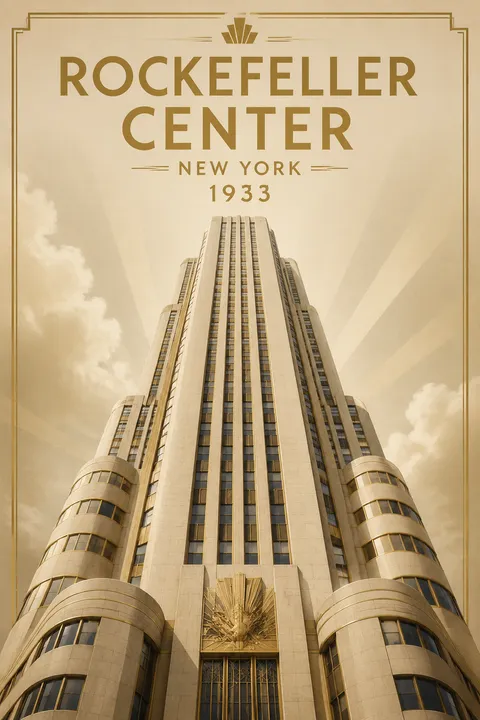
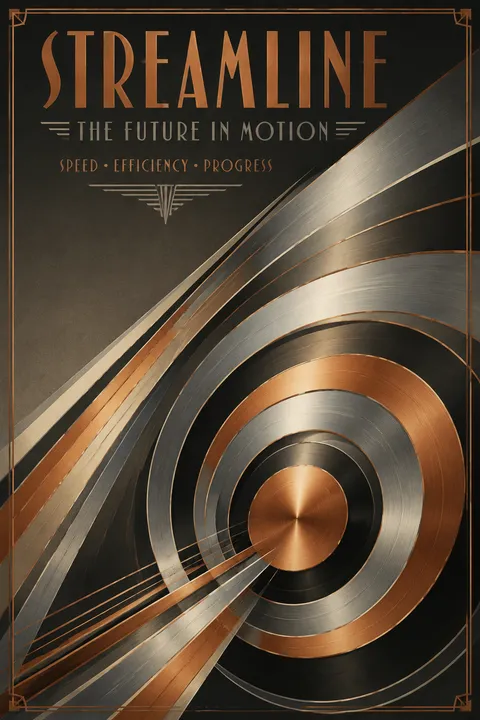
Featured Deco Moderne Posters

Style Guide

The Art of Deco Moderne?

Deco Moderne arose in the early 1930s as Art Deco adapted to Depression-era realities and the growing influence of Modernism, with designers like Norman Bel Geddes and Raymond Loewy championing streamlined forms inspired by industry and transportation. The style’s philosophy asserts that sophistication and efficiency are not opposites—streamlining is seen as a path to elegance, preserving visual pleasure while embracing honest, functional materials and a spirit of optimistic progress.
Deco Moderne representative poster

Watch: Creating a Poster in 30s

Turn Ideas into Art in Seconds

1

Describe Your Vision

Simply type your idea or concept for the poster.

2

Select Deco Moderne Style

Our AI applies the specific Deco Moderne design rules to your concept.

3

Customize & Download

Fine-tune colors, add text, and export in high-resolution.

Why Designers Choose Us

The professional choice for AI-generated design

Instant Speed

Results in < 30s

CC0 License

100% Commercial Use

Fully Editable

Layer-by-layer control

High Res

Print-ready quality

Deco Moderne Design Guide

About Deco Moderne Design

Deco Moderne arose in the early 1930s as Art Deco adapted to Depression-era realities and the growing influence of Modernism, with designers like Norman Bel Geddes and Raymond Loewy championing streamlined forms inspired by industry and transportation. The style’s philosophy asserts that sophistication and efficiency are not opposites—streamlining is seen as a path to elegance, preserving visual pleasure while embracing honest, functional materials and a spirit of optimistic progress.

History of Deco Moderne

Deco Moderne (also called Streamline Moderne) emerged in the early 1930s as Art Deco evolved under Depression-era constraints and growing Modernist influence. Where 1920s Art Deco embraced lavish ornamentation, Deco Moderne streamlined these impulses—retaining geometric elegance while embracing industrial materials and aerodynamic forms inspired by advances in automotive, aviation, and marine design. Key practitioners included industrial designers Norman Bel Geddes, Raymond Loewy, and Walter Dorwin Teague, who applied streamlined aesthetics to everything from locomotives to pencil sharpeners. Architectural examples include New York's Radio City Music Hall (1932), the Chrysler Airflow automobile (1934), and the ocean liner SS Normandie (1935). The style represented optimistic belief that modern design could lift Depression-era spirits through affordable elegance. In graphic design, Deco Moderne manifests in smooth gradients suggesting chrome and speed, horizontal emphasis evoking motion, reduced ornament that maintains sophistication, and typography balancing geometric construction with flowing curves. The style bridges Art Deco's decorative exuberance and International Style's austere functionalism, offering designers a vocabulary of elegant modernity without minimalist severity.

Design Philosophy

Deco Moderne poster design believes that elegance and efficiency can coexist—that streamlining enhances rather than eliminates beauty. The philosophy retains Art Deco's commitment to visual pleasure while incorporating Modernist principles of functional form and honest materials. Core visual elements include rounded corners and smooth curves suggesting aerodynamic efficiency, horizontal speed lines, chrome and metallic effects, restrained but present geometric ornament, and color palettes emphasizing elegant neutrals with accent colors. The emotional register is sophisticated, optimistic, and forward-looking—Deco Moderne design projects confidence in modern progress while maintaining commitment to visual refinement and human-scale elegance.

Deco Moderne FAQ

Quick answers about designing Deco Moderne posters.

What distinguishes Deco Moderne from traditional Art Deco?

Deco Moderne (Streamline Moderne) emerged in the 1930s as a response to the Great Depression, favoring functional simplicity over Art Deco's ornate luxury. While Art Deco featured lavish materials, geometric patterns, and exotic influences, Deco Moderne emphasized aerodynamic curves, smooth surfaces, and affordable materials like chrome, glass, and concrete.

What are the key visual elements of Deco Moderne?

Deco Moderne is characterized by sleek, aerodynamic forms inspired by modern transportation—ocean liners, airplanes, and trains. Key elements include curved corners, long horizontal 'speed lines,' glass brick walls, porthole windows, flat roofs, and chrome hardware. Colors tend toward subdued whites, beiges, and earth tones rather than Art Deco's vivid palette.

Which designers pioneered Deco Moderne?

Raymond Loewy, a pioneer of industrial design, was instrumental in popularizing Streamline Moderne through his work on everything from locomotives to household appliances. Norman Bel Geddes introduced futuristic, flowing designs devoid of ornamentation. Both designers helped translate the aesthetic from architecture into mass-produced consumer goods.

Where can Deco Moderne design still be seen today?

Deco Moderne architecture remains visible in buildings from the 1930s and 1940s, particularly in American cities where the style flourished after the 1933-34 Chicago World's Fair. Classic examples include streamlined diners, movie theaters, and apartment buildings featuring characteristic curved facades, horizontal banding, and nautical-inspired elements.

Ready to design your next poster?

Create Deco Moderne Poster
Deco Moderne Style Posters - AI Generator | Poster