
Dadaism Posters
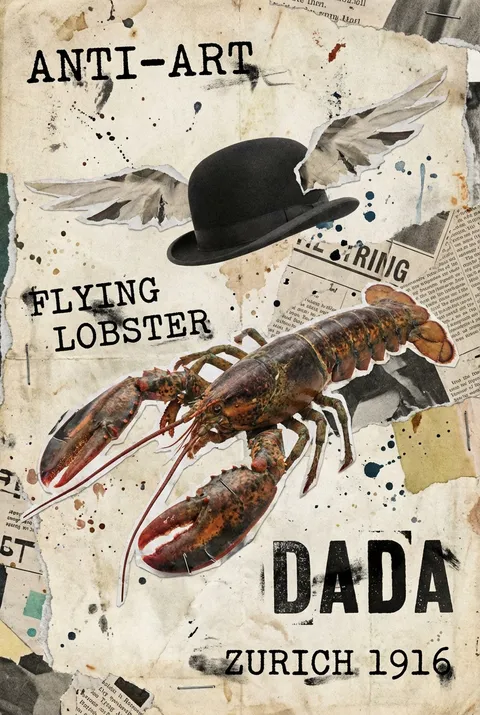
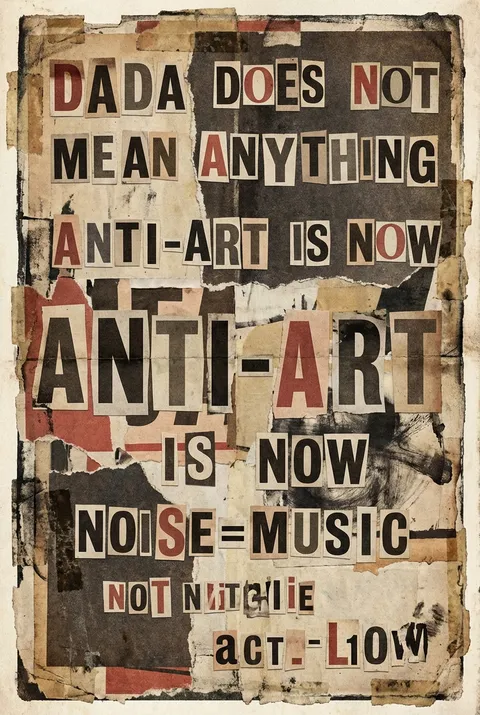
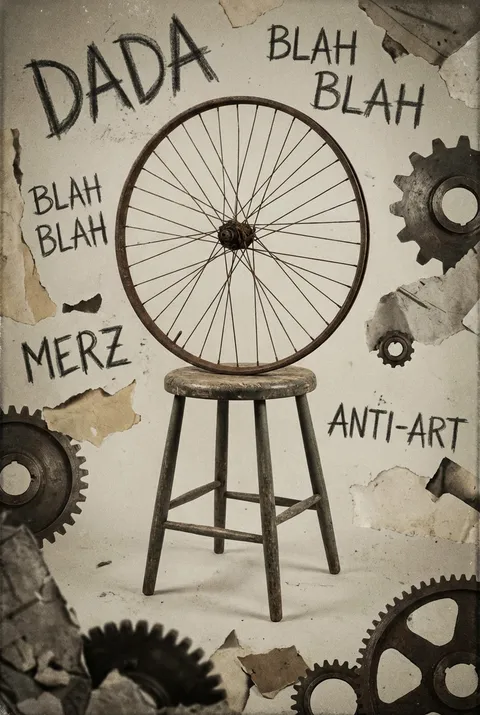
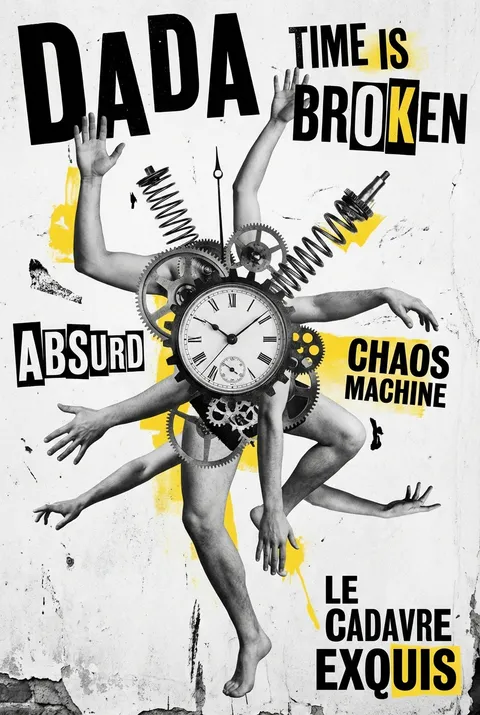
Dadaism erupted in 1916 Zurich amid World War I’s devastation, led by Hugo Ball, Emmy Hennings, Tristan Tzara, and Hans Arp as an assault on the rationality they saw fueling modern catastrophe. Rejecting logic and coherence, Dadaist design employs chance, absurd juxtapositions, and deliberate disruptions to expose the hidden ideologies within visual communication, insisting that nonsense can reveal deeper truths.
5 credits for new user registration. No credit card required.
Create Your Own Dadaism Poster
Use our AI generator to design Dadaism posters in seconds with full commercial rights.
Create Dadaism Poster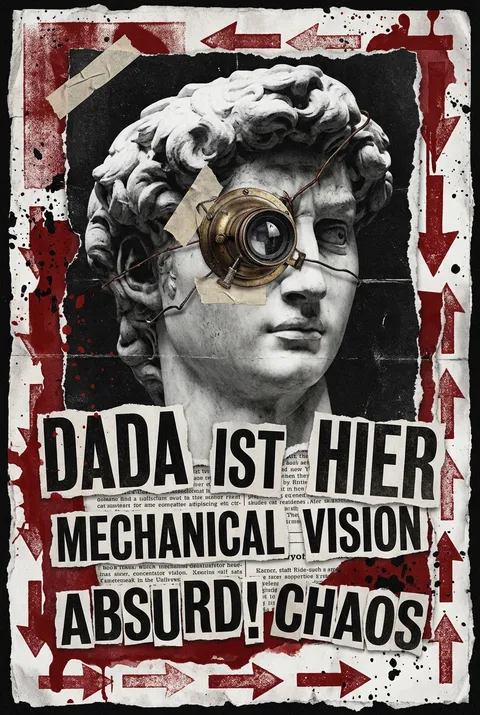
The Art of Dadaism?
Turn Ideas into Art in Seconds
Describe Your Vision
Simply type your idea or concept for the poster.
Select Dadaism Style
Our AI applies the specific Dadaism design rules to your concept.
Customize & Download
Fine-tune colors, add text, and export in high-resolution.
Why Designers Choose Us
The professional choice for AI-generated design
Instant Speed
Results in < 30s
CC0 License
100% Commercial Use
Fully Editable
Layer-by-layer control
High Res
Print-ready quality
About Dadaism Design
History of Dadaism
Design Philosophy
Related Keywords
Dadaism FAQ
Quick answers about designing Dadaism posters.
What is dadaism and why is it called 'anti-art'?
Dadaism emerged during World War I as a radical artistic movement that deliberately challenged and rejected conventional artistic values and societal norms. It earned the label 'anti-art' because its practitioners intentionally created works meant to shock, confuse, and provoke audiences. The movement embraced nonsense, irrationality, and chaos as direct responses to the horrors of war.
How did Marcel Duchamp contribute to dadaism?
Marcel Duchamp became dadaism's most iconic figure through his 'readymade' concept—presenting ordinary manufactured objects as art. His 1917 work Fountain, a porcelain urinal signed 'R. Mutt,' sparked intense debate about the nature of art itself. Duchamp challenged the idea that art required physical craftsmanship, arguing that the artist's intention and conceptual framework mattered more than technical skill.
What techniques and media did dadaists use?
Dadaists worked across multiple media including painting, collage, sculpture, performance, and poetry. They employed randomness, paradox, and subconscious forces in their creative process. The movement pioneered photomontage, sound poetry, and absurdist performance art. Hugo Ball's Cabaret Voltaire in Zurich became a hub for these experimental approaches.
What lasting influence did dadaism have on art?
Dadaism's questioning of artistic fundamentals profoundly shaped subsequent art movements. It directly inspired Surrealism and laid the groundwork for Conceptual art, which prioritizes ideas over visual appeal. The movement's influence extends to pop art, Fluxus, and even punk rock, with its rebellious rejection of established cultural authority remaining relevant in contemporary creative practice.
Ready to design your next poster?
Create Dadaism Poster