
Cubism Posters
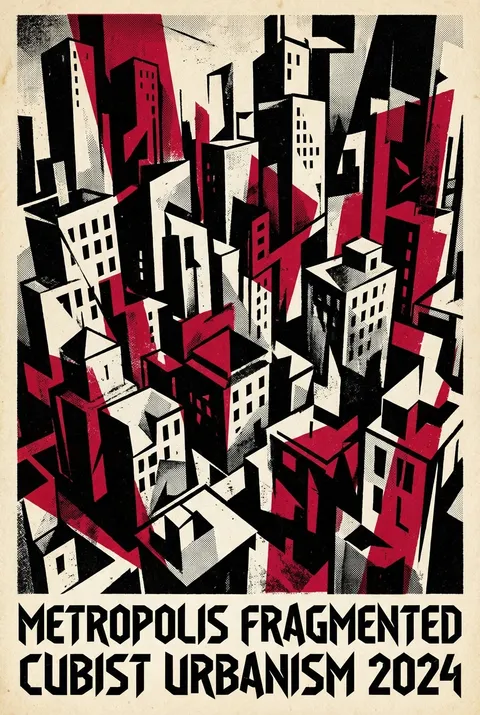
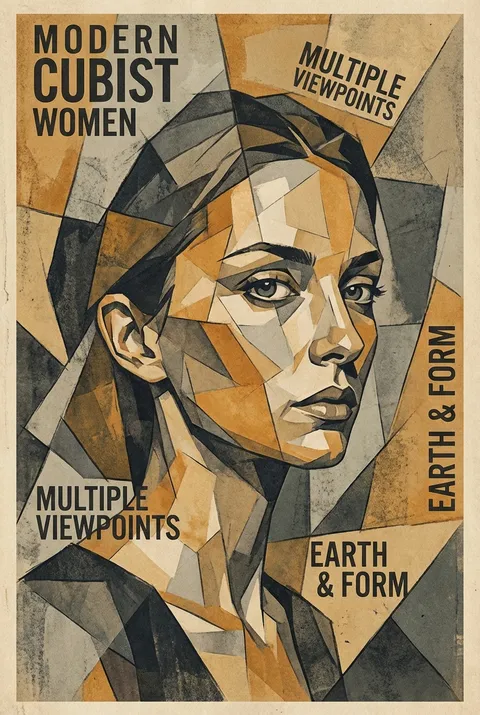
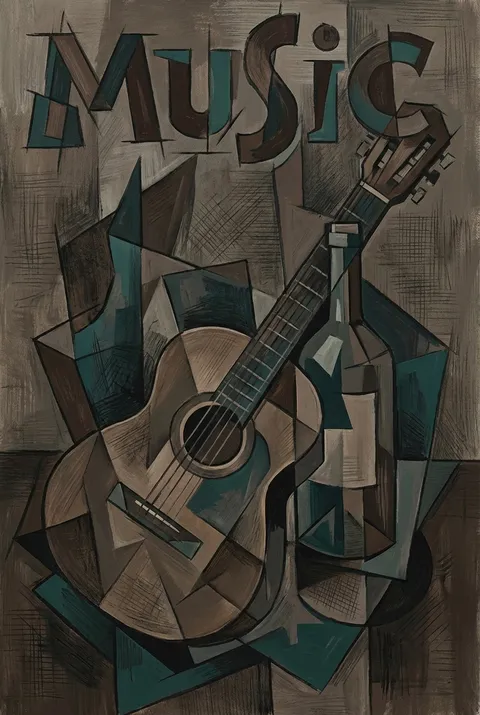
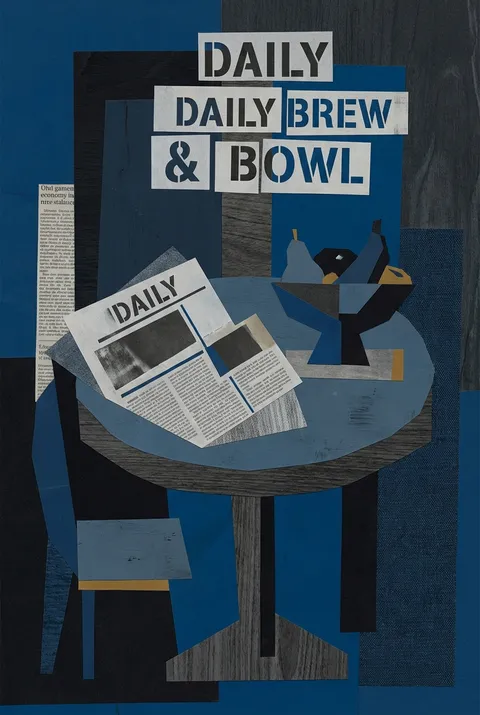
Cubism emerged in early 20th-century France, as Pablo Picasso and Georges Braque dismantled traditional perspective to explore new ways of representing reality. Guided by the belief that truth lies in the interplay of multiple viewpoints, Cubist design fragments forms into geometric facets and layers, inviting viewers to reconstruct meaning from simultaneous perspectives rather than a singular, illusionistic image.
5 credits for new user registration. No credit card required.
Create Your Own Cubism Poster
Use our AI generator to design Cubism posters in seconds with full commercial rights.
Create Cubism Poster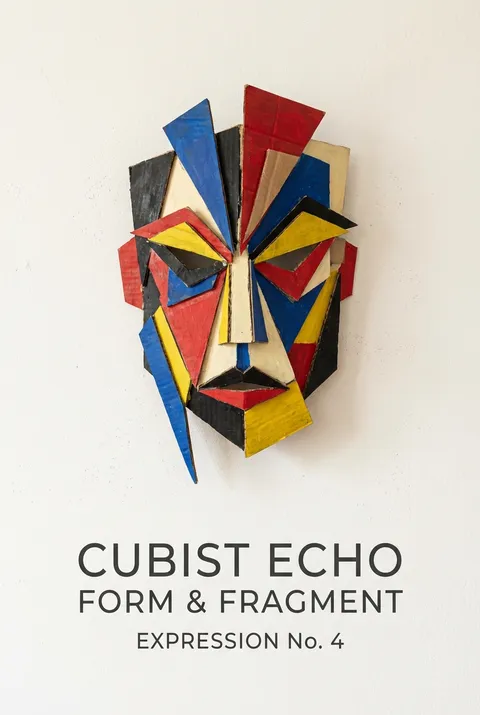
Turn Ideas into Art in Seconds
Describe Your Vision
Simply type your idea or concept for the poster.
Select Cubism Style
Our AI applies the specific Cubism design rules to your concept.
Customize & Download
Fine-tune colors, add text, and export in high-resolution.
Why Designers Choose Us
The professional choice for AI-generated design
Instant Speed
Results in < 30s
CC0 License
100% Commercial Use
Fully Editable
Layer-by-layer control
High Res
Print-ready quality
About Cubism Design
History of Cubism
Design Philosophy
Related Keywords
Cubism FAQ
Quick answers about designing Cubism posters.
What defines the cubism style in design?
Cubism is characterized by the fragmentation of objects into geometric shapes and the simultaneous display of multiple viewpoints within a single composition. Rather than depicting subjects from one fixed perspective, this style breaks down forms into overlapping planes, creating a flattened, abstract representation that emphasizes the two-dimensional nature of the surface.
Who were the key figures in developing cubism?
Pablo Picasso and Georges Braque were the primary creators of Cubism, working so closely together in Paris between 1907 and 1914 that their paintings became nearly indistinguishable. The style emerged with Picasso's revolutionary painting Les Demoiselles d'Avignon, and was further developed through their intense collaborative experimentation with form and perspective.
What are the two main phases of cubism?
Cubism evolved through two distinct phases: Analytical Cubism (1910-1912), which featured highly abstracted works reduced to overlapping planes in monochromatic browns, grays, and blacks; and Synthetic Cubism (1912-1914), which introduced simpler shapes, brighter colors, and innovative collage techniques using newspaper print and patterned paper.
How did cubism influence modern art and design?
Cubism is considered one of the most influential art movements of the 20th century, opening up new possibilities for visual representation. It served as the foundation for later abstract styles including Constructivism and Neo-Plasticism, and had a profound impact on sculpture, architecture, and graphic design by challenging traditional notions of perspective and form.
Ready to design your next poster?
Create Cubism Poster