
Chinese Ink Posters
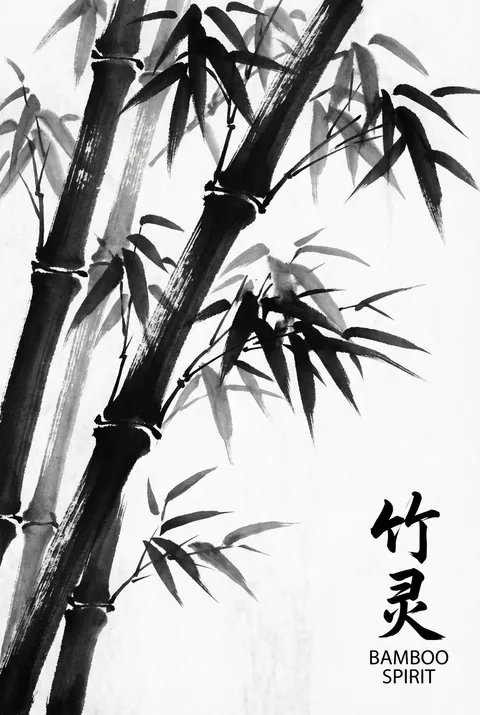
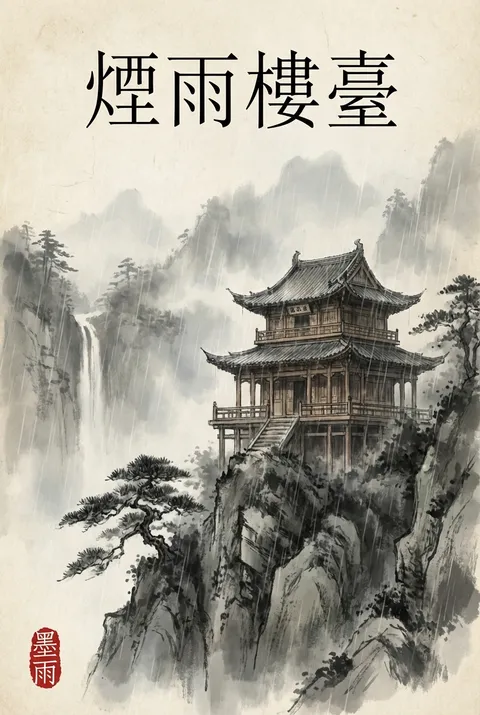
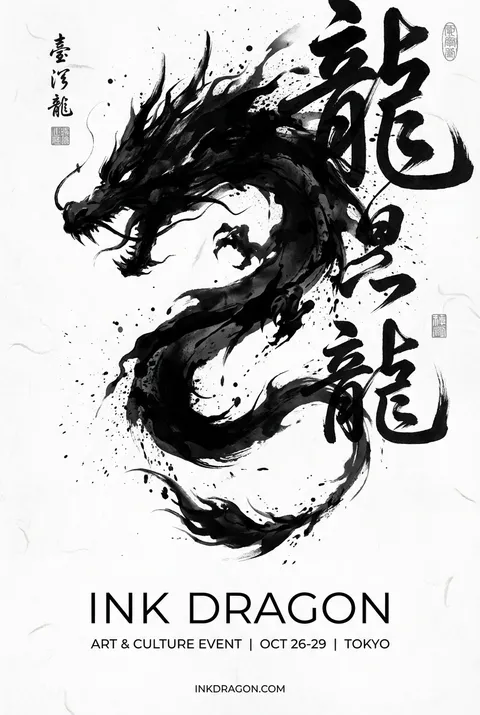
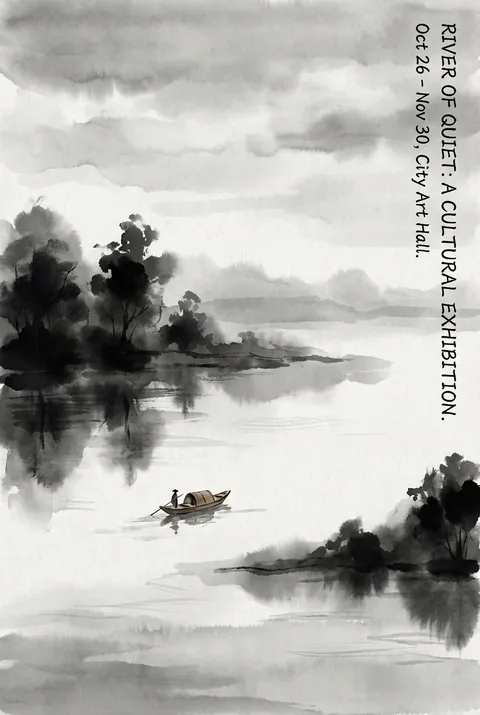
Rooted in ancient Chinese calligraphy and landscape painting, Chinese ink style (shuǐmòhuà) developed over centuries, reaching artistic maturity during the Tang and Song dynasties through masters like Fan Kuan and Guo Xi. Guided by Taoist thought, the style treats negative space as an active force—compositions reveal mood and meaning through tonal gradation, brushwork, and the subtle interplay between emptiness and presence.
5 credits for new user registration. No credit card required.
Create Your Own Chinese Ink Poster
Use our AI generator to design Chinese Ink posters in seconds with full commercial rights.
Create Chinese Ink Poster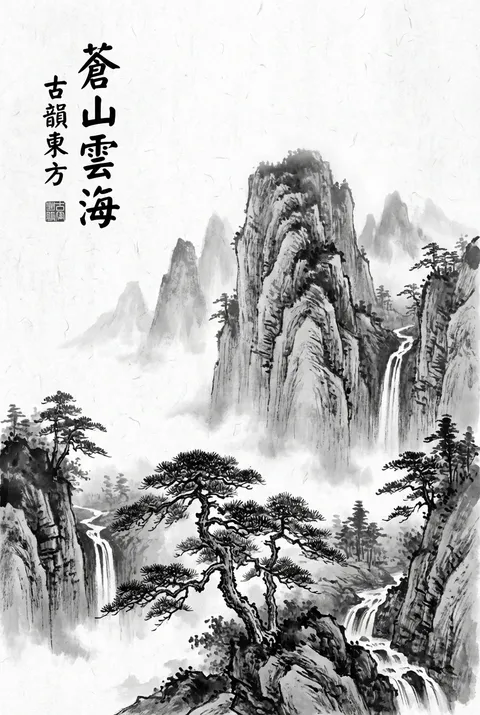
The Art of Chinese Ink?
Turn Ideas into Art in Seconds
Describe Your Vision
Simply type your idea or concept for the poster.
Select Chinese Ink Style
Our AI applies the specific Chinese Ink design rules to your concept.
Customize & Download
Fine-tune colors, add text, and export in high-resolution.
Why Designers Choose Us
The professional choice for AI-generated design
Instant Speed
Results in < 30s
CC0 License
100% Commercial Use
Fully Editable
Layer-by-layer control
High Res
Print-ready quality
About Chinese Ink Design
History of Chinese Ink
Design Philosophy
Related Keywords
Chinese Ink FAQ
Quick answers about designing Chinese Ink posters.
What is Chinese ink wash painting (shui mo hua)?
Ink wash painting (水墨画, shuǐmòhuà) is a type of Chinese ink brush painting which uses washes of black ink in different concentrations. It originated during the Tang Dynasty (618–907 CE), and has been a cornerstone of Chinese art. It is said that the technique was invented by an artist named Wang Wei.
What are the key techniques in Chinese ink painting?
The basic techniques include Gongbi (工筆), which is a meticulous method, and Xieyi (寫意), which is more free and expressive. The technique lays emphasis on shading, different ink tonalities and the combination of various ink tones. In ink painting, the main aspect is to depict three kinds of ink intensities—dark, medium and light—in one single brushstroke.
What are the Four Treasures of Chinese ink painting?
The essential tools for ink painting are the brush (毛笔 / Mao bi), paper (纸 / Zhi) and ink (墨 / Mo). Together with the ink stone (砚台 / Yan tai), these tools form the Four Treasures (文房四宝 / wen fang si bao) of a painter. Ink wash painting is usually done on Xuan paper or washi, both of which are highly absorbent.
What is the philosophical foundation of Chinese ink art?
Rooted in Daoist, Confucian, and Zen Buddhist philosophies, it prioritizes the essence and spirit of a subject over its realistic details. Negative space (空白, emptiness) is as important as painted areas, symbolizing the void in Daoist philosophy. The brushstroke is less a means of applying ink than a philosophical or emotional statement.
What subjects are common in Chinese ink painting?
Common subjects include landscapes (山水, shanshui), flowers and birds (花鸟画, huaniao hua), and animals like bamboo, horses, or fish. Themes often carry symbolic meanings, such as bamboo for resilience or cranes for longevity. Having developed alongside Chinese calligraphy, ink wash paintings often integrate poetry with visual imagery.
Ready to design your next poster?
Create Chinese Ink Poster