
Bauhaus Posters
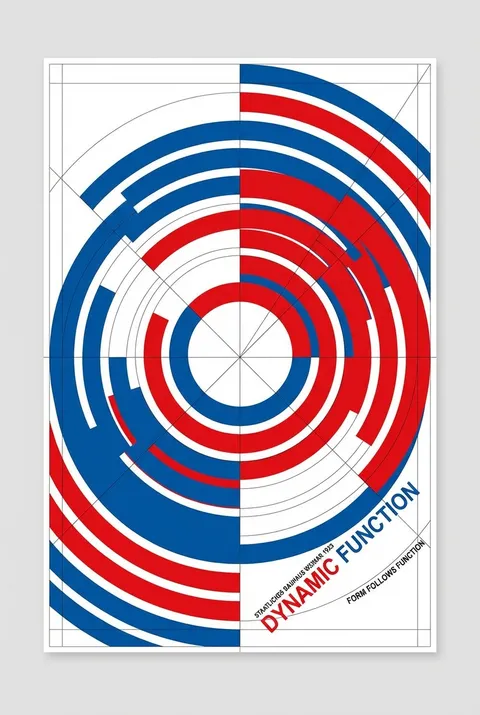
Founded in 1919 by Walter Gropius in Weimar, Germany, the Bauhaus school arose to bridge art, craft, and industry, shaping a new vision for modern design through figures like Johannes Itten, László Moholy-Nagy, and Josef Albers. Bauhaus philosophy asserts that form follows function, advocating for geometric clarity, rational composition, and accessibility through industrial production—where beauty emerges from honest, purposeful design.
5 credits for new user registration. No credit card required.
Create Your Own Bauhaus Poster
Use our AI generator to design Bauhaus posters in seconds with full commercial rights.
Create Bauhaus Poster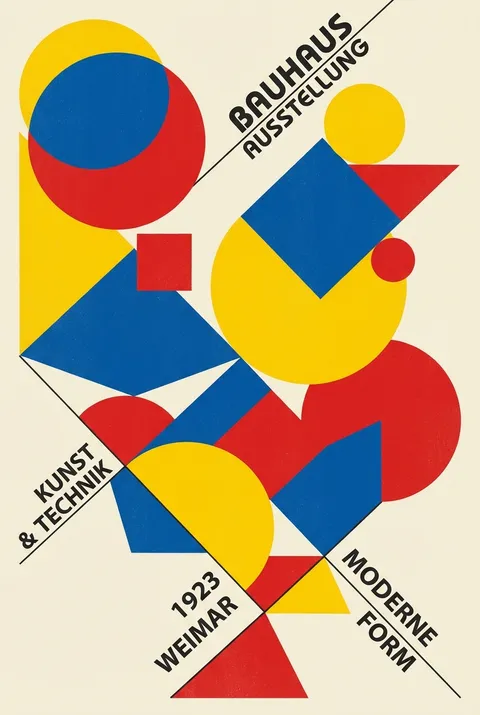
Turn Ideas into Art in Seconds
Describe Your Vision
Simply type your idea or concept for the poster.
Select Bauhaus Style
Our AI applies the specific Bauhaus design rules to your concept.
Customize & Download
Fine-tune colors, add text, and export in high-resolution.
Why Designers Choose Us
The professional choice for AI-generated design
Instant Speed
Results in < 30s
CC0 License
100% Commercial Use
Fully Editable
Layer-by-layer control
High Res
Print-ready quality
About Bauhaus Design
History of Bauhaus
Design Philosophy
Related Keywords
Bauhaus FAQ
Quick answers about designing Bauhaus posters.
What are the core design principles of Bauhaus?
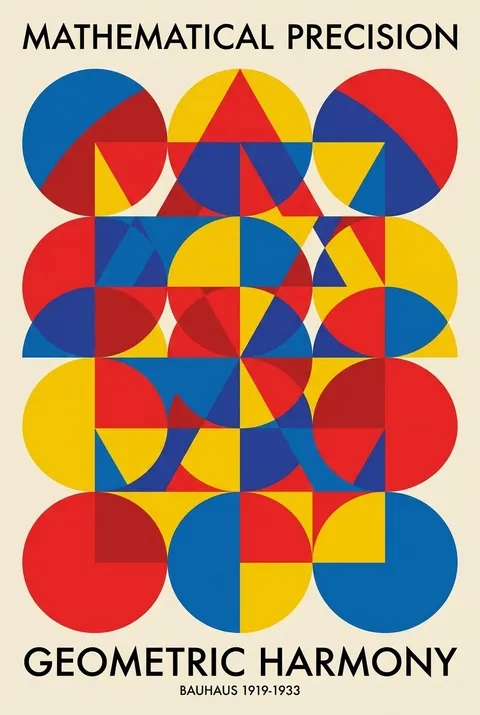
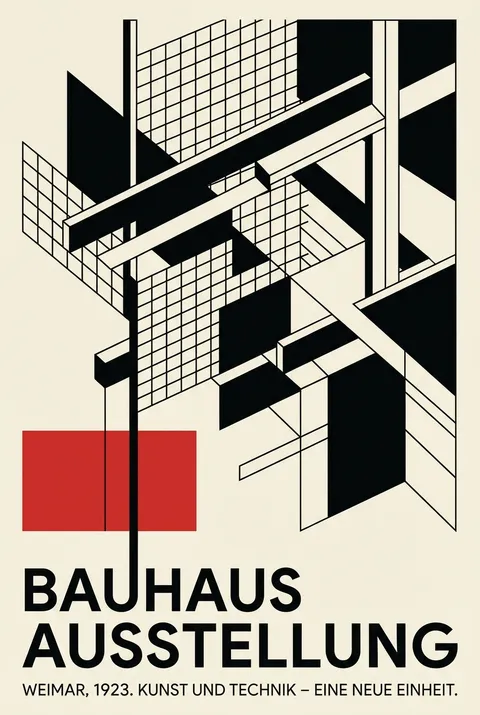
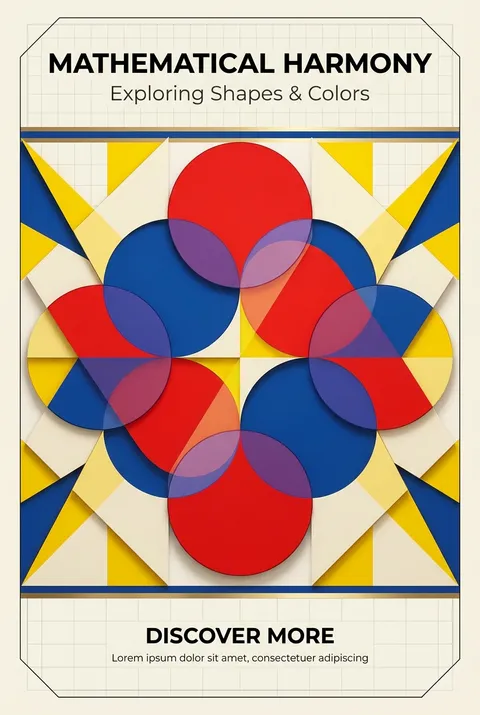
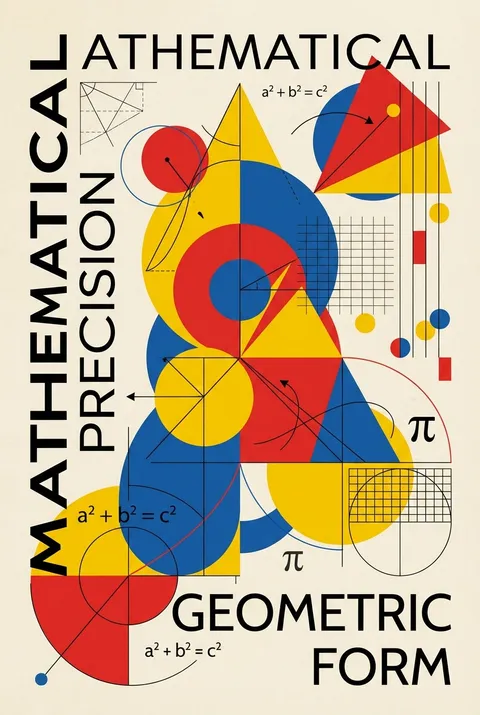
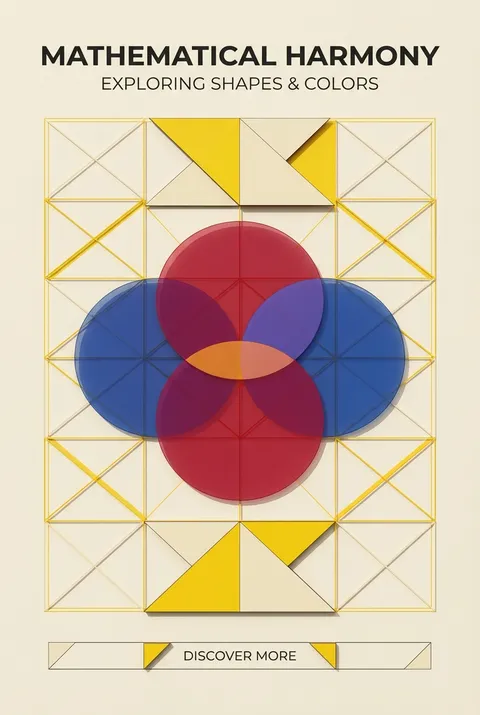
Bauhaus posters represent the movement's broader philosophies: 'Form follows function,' simplification of design elements, and a focus on geometric shapes. These posters usually feature sans-serif typefaces, clean lines, and a restricted colour palette, often limited to primary colours—red, blue, and yellow—plus black and white. Bauhaus design is associated with primary colors, thick straight lines slashing across white space, and that emphatically modern trilogy of circle, triangle and square.
What typography defines Bauhaus poster design?
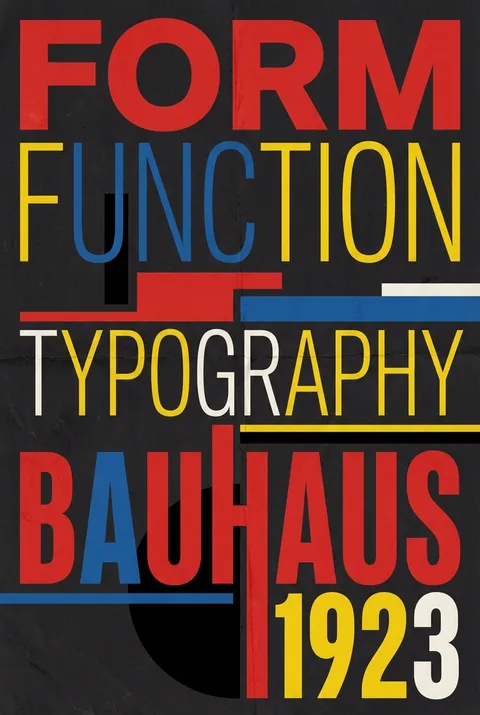
Typography was central to Bauhaus. Herbert Bayer was the first typography designer from the Bauhaus school and he contributed to the creation of the Bauhaus style font named Universal. The idea from the Bauhaus School about perfect design was that it must be accessible to all—this inspired Herbert Bayer in the typographic field, focusing on typefaces that were easy to read, avoiding the use of serif. This 'Universal' typeface was simplistic, eliminating capital letters and serifs.
How did Bauhaus designers use typography as visual art?
In many instances, Bauhaus designers manipulated typefaces to serve as textual and visual elements. Letters could be tilted, stretched, or layered to serve dual functions. This interplay between form and function in typography is a hallmark of Bauhaus design. Bauhaus posters featured letters that are stretched and scaled, becoming part of the structure rather than floating on top of it. Bauhaus typography is functional and sculptural.
Who were the key figures in Bauhaus graphic design?
Herbert Bayer, Joost Schmidt, and László Moholy-Nagy were the leading figures in the creation of Bauhaus-style posters. László Moholy-Nagy explored typography as visual art, creating dynamic compositions that integrated text and image in revolutionary ways. His experimental photomontages and typographic posters demonstrated how traditional boundaries between fine art and graphic design could be dissolved.
How has Bauhaus influenced modern design?
Bauhaus design principles have been incorporated into various forms of modern advertising, corporate identities, and even digital interfaces. Today's graphic designers still borrow heavily from the Bauhaus playbook, opting for minimalist layouts, grid-based designs, and sans-serif fonts. The movement rejected ornamentation and historical revivalism in favor of minimalism, abstraction, and purpose-driven design.
Ready to design your next poster?
Create Bauhaus Poster