
3D Isometric Posters
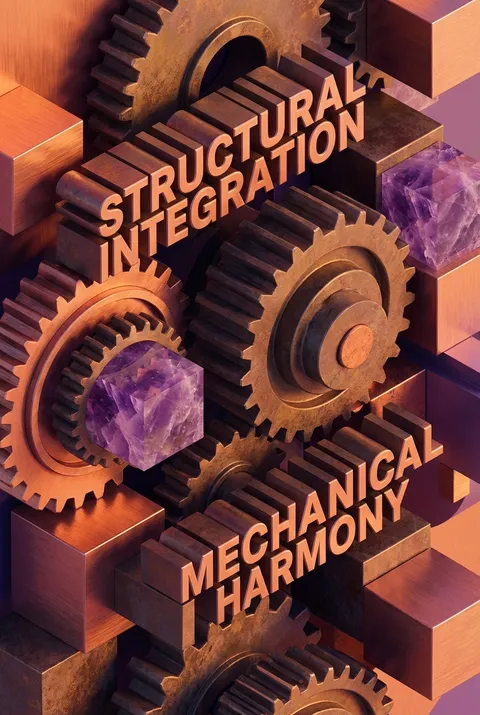
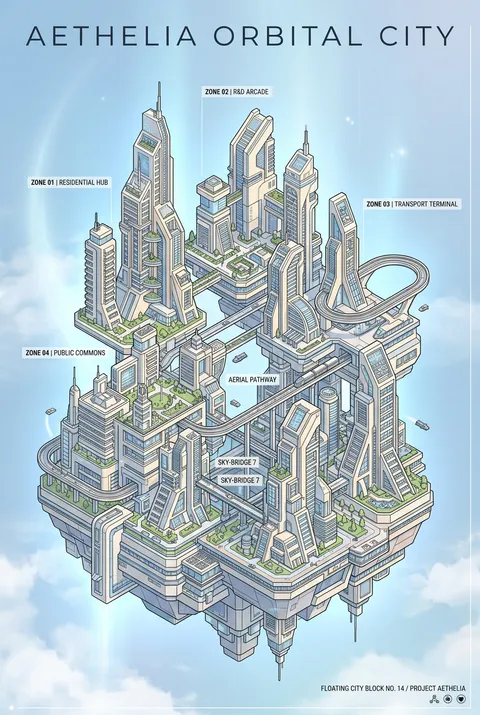
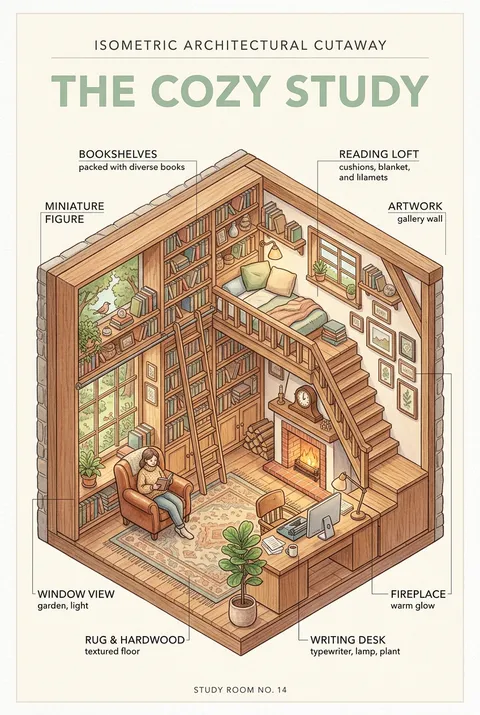
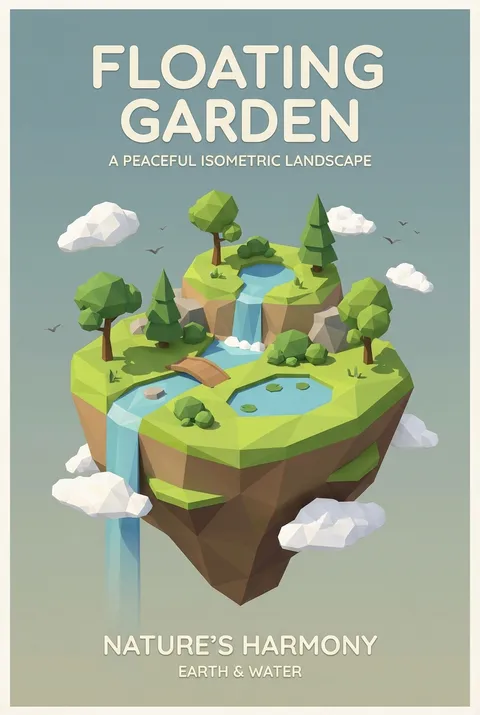
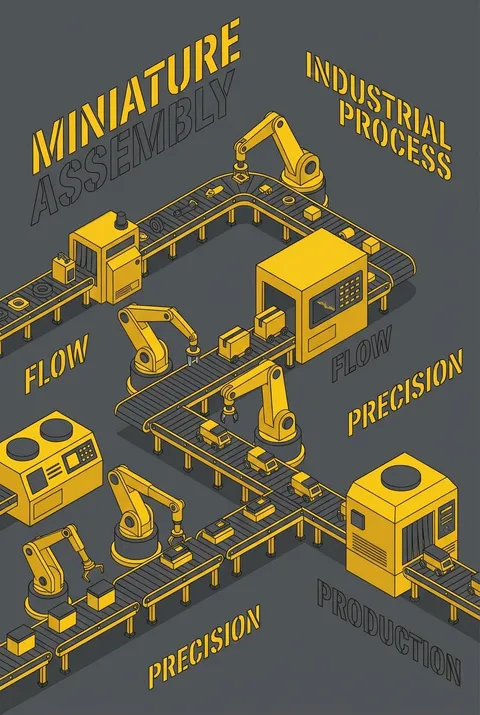
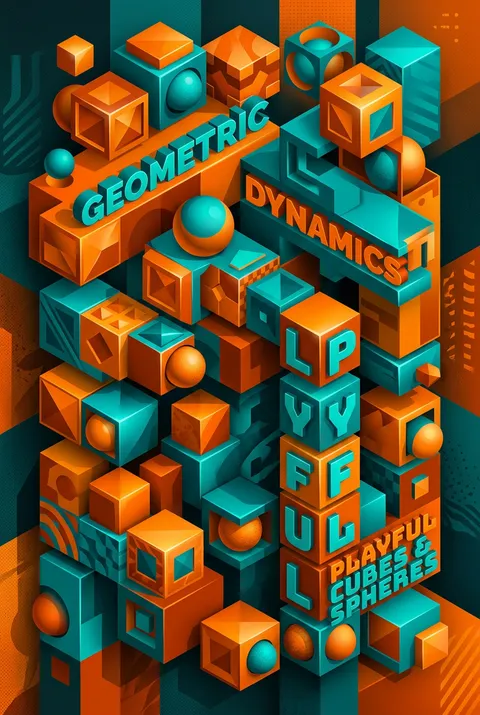
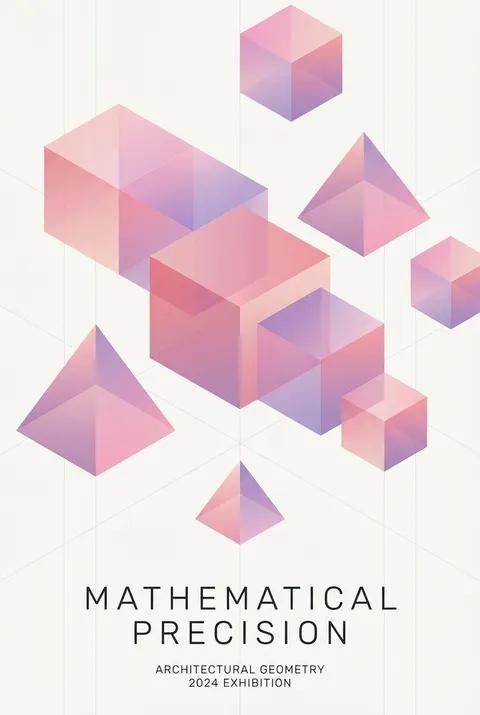
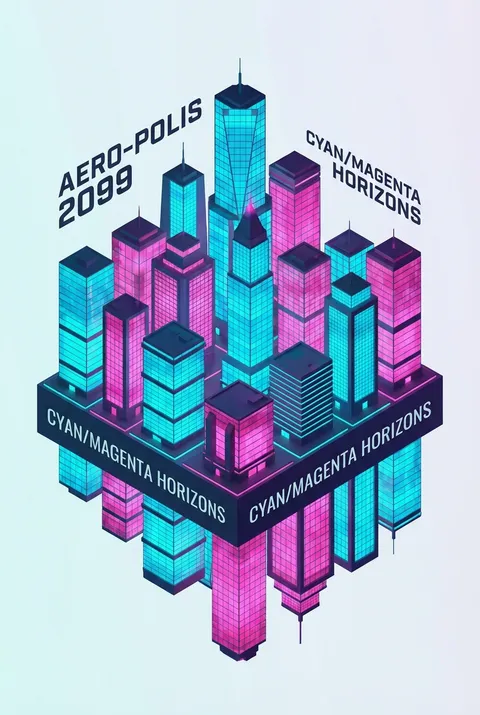
3D Isometric design, formalized in 1822 by British mathematician William Farish for engineering and architectural drafting, brought precise, distortion-free representation of three-dimensional forms to technical drawing. The style’s philosophy emphasizes equal treatment of every axis and element, favoring visual clarity, consistent geometry, and a sense of balanced order where hierarchy arises from content rather than spatial illusion.
5 credits for new user registration. No credit card required.
Create Your Own 3D Isometric Poster
Use our AI generator to design 3D Isometric posters in seconds with full commercial rights.
Create 3D Isometric Poster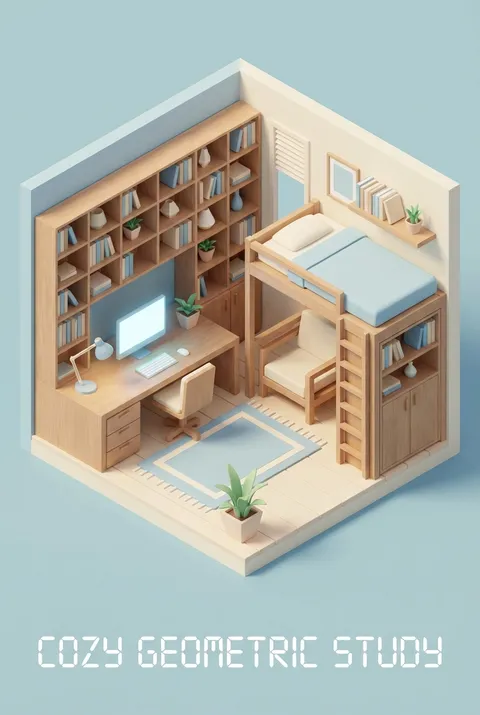



The Art of 3D Isometric?
Turn Ideas into Art in Seconds
Describe Your Vision
Simply type your idea or concept for the poster.
Select 3D Isometric Style
Our AI applies the specific 3D Isometric design rules to your concept.
Customize & Download
Fine-tune colors, add text, and export in high-resolution.
Why Designers Choose Us
The professional choice for AI-generated design
Instant Speed
Results in < 30s
CC0 License
100% Commercial Use
Fully Editable
Layer-by-layer control
High Res
Print-ready quality
About 3D Isometric Design
History of 3D Isometric
Design Philosophy
Related Keywords
3D Isometric FAQ
Quick answers about designing 3D Isometric posters.
What is isometric design and how does it work?
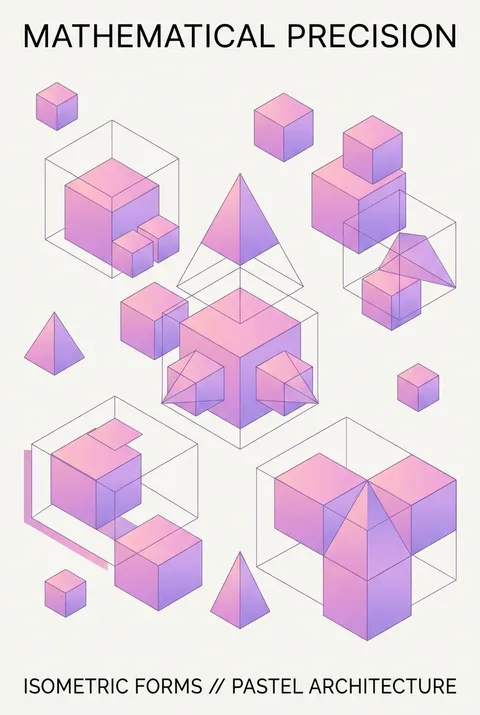
Isometric design is a facet of graphic design that pertains to a unique way of presenting visuals by drawing three-dimensional objects in two-dimensional planes. Isometric means 'equal measure' - all the object's axes should come together at a point with a 120-degree angle, meaning isometric objects have equal and accurate measurements. In isometric objects, the parallel lines never converge.
Why is isometric design popular in modern graphic design?
Isometric design is a natural evolution out of flat design that retained its simplicity, but also added some new depth—literally. It creates a sense of depth and dimensionality, allowing designers to create complex, three-dimensional objects and scenes while still maintaining a simple and clean design aesthetic. It's a happy medium between a completely flat design and a realistic, fully rendered 3D design.
How does typography work in isometric poster design?
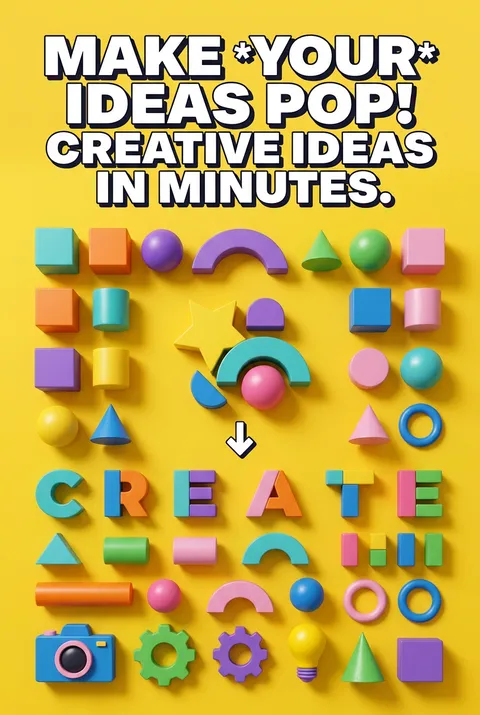
Typography is very important as different fonts have different visual qualities that will either enhance or weaken the impact of your poster. An isometric font can sit in harmony with isometric images. The simplicity of the lettering can be livelier and more recognizable when presented in 3D. Also, isometric typography is more interesting to view from all angles.
What are the benefits of isometric design for storytelling?
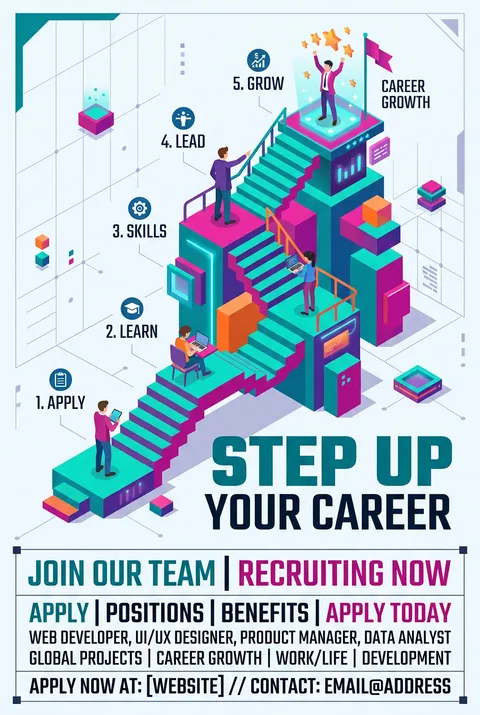
The isometric technique allows you to show more details with less clutter. Having the ability to show a space in 3D opens up nooks and crannies previously unavailable—there's literally more space to put things in. Isometric design is great for storytelling, allowing designers to create scenes and environments that tell a story. For example, an isometric design of a cityscape could tell the story of a bustling metropolis.
What color schemes work best with isometric illustrations?
A cool tendency in isometric illustrations is the monochrome color scheme or limited color scheme which makes the composition feel minimalist. Flat design has been integrated with isometric illustrations, making them look modern and appealing, which is why they appear on many places – posters, web designs, landing pages, etc.
Ready to design your next poster?
Create 3D Isometric Poster