
self-taught Posters
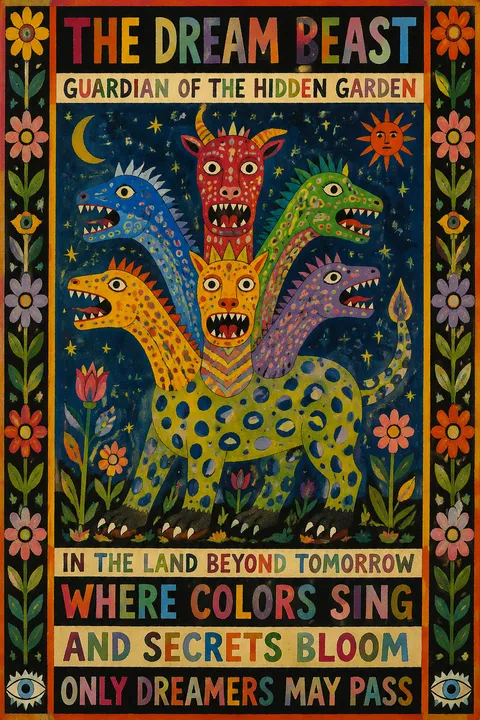
Coined in 1972 by British critic Roger Cardinal as the English counterpart to Jean Dubuffet’s “Art Brut,” Outsider Art describes work by self-taught creators operating beyond conventional art institutions—figures like Henry Darger, Martin Ramirez, and Howard Finster. The style’s philosophy values personal necessity over formal training, cultivating obsessive detail, raw symbolism, and an intensity that emerges from compulsion rather than calculated design.
5 credits for new user registration. No credit card required.
Create Your Own self-taught Poster
Use our AI generator to design self-taught posters in seconds with full commercial rights.
Create self-taught PosterThe Art of self-taught?
Turn Ideas into Art in Seconds
Describe Your Vision
Simply type your idea or concept for the poster.
Select self-taught Style
Our AI applies the specific self-taught design rules to your concept.
Customize & Download
Fine-tune colors, add text, and export in high-resolution.
Why Designers Choose Us
The professional choice for AI-generated design
Instant Speed
Results in < 30s
CC0 License
100% Commercial Use
Fully Editable
Layer-by-layer control
High Res
Print-ready quality
About self-taught Design
History of Outsider Art
Design Philosophy
Related Keywords
self-taught FAQ
Quick answers about designing self-taught posters.
What defines outsider art and where did the term originate?
Outsider art refers to creative works produced by self-taught individuals operating outside conventional art institutions and training. Art critic Roger Cardinal coined the English term in 1972, building on French artist Jean Dubuffet's concept of Art Brut (raw art) from the 1940s. These artists typically have minimal exposure to mainstream art traditions, creating work driven purely by personal vision rather than learned conventions.
Who are considered outsider artists and what backgrounds do they come from?
Classic outsider artists include psychiatric patients like Aloïse Corbaz and Carlo Zinelli, spiritualist mediums such as Augustin Lesage and Madge Gill, prisoners, and social isolates. These creators work from positions outside the mainstream art world not by choice but circumstance, producing art as an expression of inner vision or psychological necessity rather than career ambition or aesthetic trends.
What visual characteristics distinguish outsider art from conventional art?
Outsider art often displays intensely personal imagery, elaborate fantasy worlds, and unconventional use of materials including cardboard, scrap metal, and repurposed objects. The work tends toward obsessive detail, repetitive patterns, and raw emotional expression unconstrained by formal training. Pieces frequently explore themes of personal mythology, spiritual visions, and inner psychological landscapes with striking originality.
How does outsider art differ from naive art and folk art?
While all involve self-taught creators, naive artists consciously aspire to mainstream art recognition and engage with traditional art institutions. Folk artists work within cultural traditions passed through communities. Outsider artists, by contrast, create in isolation from both mainstream and folk contexts, often unaware their work might be considered art at all, driven by pure creative compulsion rather than cultural practice or career goals.
Ready to design your next poster?
Create self-taught Poster